
Cannabis businesses face a unique challenge: traditional advertising channels remain largely restricted, forcing you to rely on organic search visibility to reach customers. While competitors in other industries pour budgets into paid ads, your dispensary or manufacturing brand must dominate Google through strategic content updates. Updating website content is crucial for cannabis dispensaries and product manufacturers to improve organic web traffic, navigate strict marketing regulations, and capture the growing wave of cannabis consumers searching online. This guide reveals how regular content updates can transform your search rankings, boost local visibility, and keep your business compliant in 2026’s competitive cannabis market.
| Point | Details |
|---|---|
| Organic search drives cannabis growth | SEO delivers most cannabis traffic since advertising platforms restrict cannabis promotions heavily |
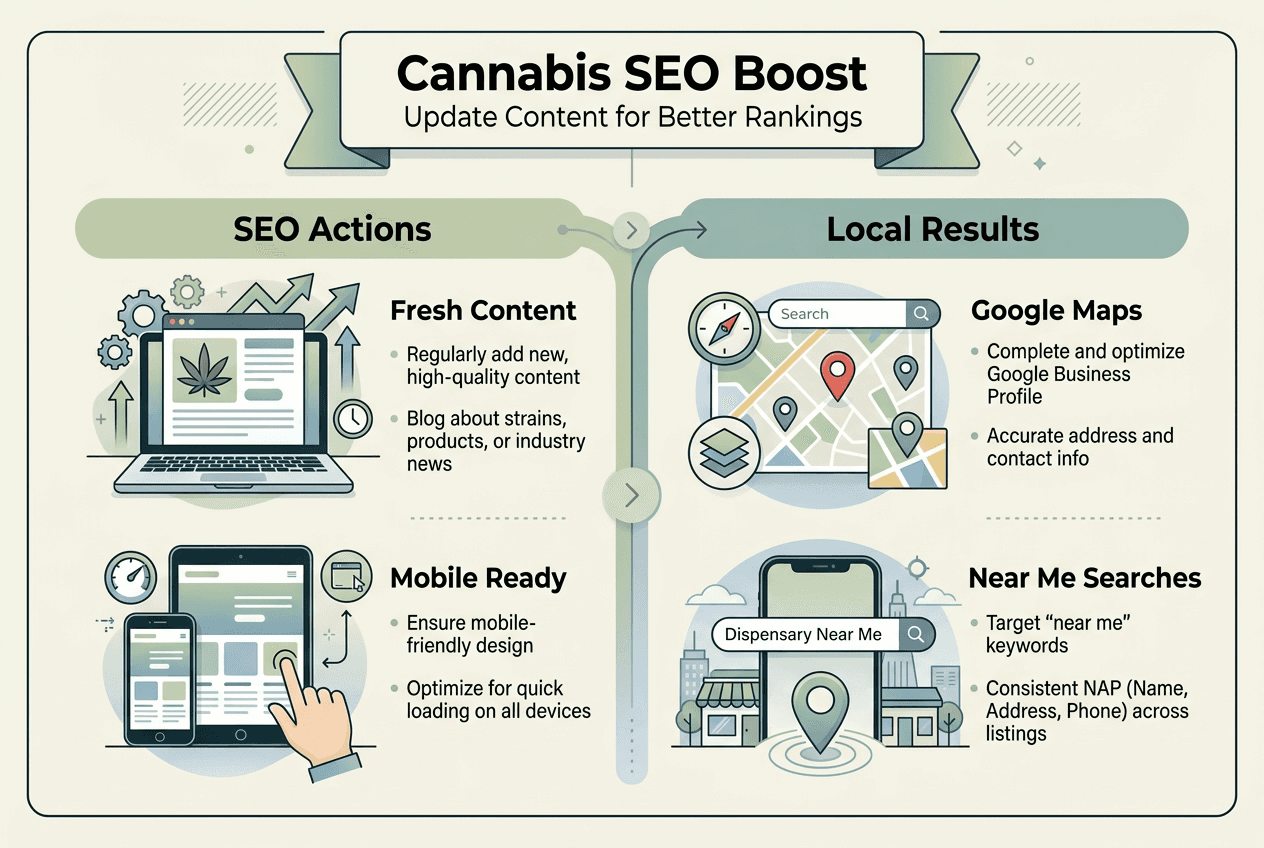
| Content updates boost local rankings | Fresh, mobile-friendly content captures location-based searches and improves user experience |
| Compliance requires regular reviews | Updating content maintains accuracy with evolving state regulations and builds consumer trust |
| Strategic updates multiply visibility | Targeted content refreshes can double first-page keyword rankings and unbranded traffic |
| Regular audits prevent penalties | Scheduled content reviews tied to inventory and regulatory changes avoid legal risks |
Cannabis businesses operate in a marketing landscape unlike any other industry. Major advertising platforms including Google Ads, Facebook, and Instagram maintain strict policies that prohibit or severely limit cannabis promotions, even in legal markets. This reality makes organic search your primary customer acquisition channel. Over 65% of cannabis consumers begin their purchase journey through Google search, making your website content the frontline of your marketing strategy.
Updating content aligns with evolving user search intent and keyword trends. Cannabis consumers in 2026 search differently than they did two years ago, using more specific product queries, seeking educational information about cannabinoids, and looking for compliance-verified retailers. Your static 2024 content cannot capture these shifting patterns. Search engines reward websites that demonstrate freshness, relevance, and authority through regular updates.
Mobile traffic now exceeds 85% for dispensary websites, demanding content that loads quickly, displays properly on small screens, and answers questions immediately. Outdated content often contains formatting issues, broken links, or slow-loading elements that frustrate mobile users and increase bounce rates. Google’s mobile-first indexing means your mobile experience directly impacts your search rankings.
Local SEO proves critical since nearly half of cannabis-related searches carry local intent. Consumers search for “dispensary near me,” “cannabis delivery in [city],” and product availability at specific locations. Your content must reflect current inventory, accurate business hours, and location-specific information to capture these high-intent searches. Stale content featuring discontinued products or outdated store details sends potential customers to competitors.
Pro Tip: Implement a monthly content audit schedule that reviews your top 20 traffic-generating pages for accuracy, mobile performance, and alignment with current why SEO for cannabis brands best practices.
Key reasons cannabis businesses must prioritize content updates:
“The cannabis industry’s advertising restrictions create a unique opportunity: businesses that master organic SEO gain an insurmountable competitive advantage while others struggle with limited visibility.”
Regular content updates deliver measurable improvements in search engine rankings and organic traffic. Cannabis brands implementing strategic content updates see 121% traffic growth over 8 months, with significant increases in both branded and unbranded search visibility. These gains stem from addressing user search intent more precisely, reducing content duplication, and signaling to search engines that your website remains active and authoritative.

Updating product pages and category content eliminates duplication issues that plague many cannabis websites. Dispensaries often list similar products with nearly identical descriptions, confusing search engines about which page to rank. Refreshing these pages with unique, detailed descriptions that highlight specific terpene profiles, effects, and usage scenarios helps each page rank for distinct keyword variations.
| Metric | Before Updates | After 8 Months | Improvement |
|---|---|---|---|
| Organic traffic | 12,400 visits/month | 27,404 visits/month | +121% |
| First-page keywords | 87 keywords | 174 keywords | +100% |
| Local pack appearances | 23 locations | 51 locations | +122% |
| Mobile bounce rate | 68% | 41% | -40% |
Local SEO updates prove especially powerful for dispensaries. Nearly half of Google searches have local intent, making location-specific content updates essential for capturing “near me” searches. This includes updating your Google Business Profile information, ensuring NAP consistency across all pages, and creating location-specific landing pages that address local market conditions, regulations, and product availability.
Mobile-friendly content updates improve user experience metrics that Google uses as ranking signals. Reducing page load times, implementing responsive design elements, and restructuring content for mobile consumption all contribute to lower bounce rates and longer session durations. These behavioral signals tell search engines your content satisfies user intent better than competitors.
Pro Tip: Use schema markup for products, local business information, and FAQs to help search engines understand your content structure. Update your XML sitemap after major content changes and submit it through Google Search Console for faster indexing. These technical elements complement your boost local SEO cannabis dispensaries content strategy.
Strategic content update priorities for maximum SEO impact:
Implementing a systematic approach to local SEO step by step cannabis dispensaries ensures you capture local search opportunities consistently while building long-term organic authority.
Cannabis businesses operate under some of the strictest marketing regulations in any industry, with rules varying significantly across states, counties, and municipalities. Regular website content updates help maintain compliance with evolving laws while building consumer trust through transparency and accuracy. Cannabis dispensaries face strict advertising limitations, making organic SEO crucial for local visibility and compliant customer communication.
Regularly updated content helps you stay ahead of regulatory changes. State cannabis control boards frequently modify packaging requirements, potency labeling standards, health warnings, and permissible marketing claims. Your website content must reflect these changes promptly to avoid penalties and maintain your license. Outdated content featuring old compliance language or prohibited claims exposes your business to regulatory action.
Content accuracy reduces risk of misinformation that could harm consumers or trigger enforcement. Cannabis products vary widely in potency, effects, and appropriate usage. Detailed, regularly reviewed product descriptions ensure customers understand what they are purchasing, reducing returns, complaints, and potential liability. This accuracy builds trust with both consumers and regulators who monitor online cannabis marketing.
Trust-building through transparent product descriptions and educational content separates professional cannabis businesses from fly-by-night operators. Consumers in legal cannabis markets increasingly expect the same level of professionalism they find in other regulated industries. Comprehensive strain information, third-party lab results, clear pricing, and honest effect descriptions demonstrate your commitment to customer education over pure sales.
High inventory turnover necessitates frequent updates to avoid outdated or misleading product information. Dispensaries often cycle through dozens of new products monthly while discontinuing others. Failing to update your website creates frustration when customers arrive expecting products no longer in stock. Real-time or daily inventory updates integrated with your point-of-sale system solve this challenge.
Pro Tip: Schedule content audits during website platform migrations to maintain rankings while ensuring compliance. Many dispensaries lose significant organic traffic during redesigns because they fail to preserve URL structures, meta data, and optimized content. A systematic migration checklist prevents these losses while providing an opportunity to update outdated content simultaneously.
Compliance-focused content update checklist:
Integrating ethics and digital marketing principles into your content strategy builds long-term brand value while protecting your business from regulatory and reputational risks.
Implementing a systematic content update process ensures consistency while maximizing SEO impact. Strategic content updates, including pillar content and category hubs, can double first-page rankings and significantly increase unbranded traffic when executed with clear frameworks and regular schedules.
Step-by-step content maintenance framework:
| Update Type | Time Investment | SEO Impact | Best For |
|---|---|---|---|
| Quick fixes | 30-60 minutes per page | Moderate, 10-25% traffic increase | Updating stats, fixing broken links, refreshing meta data |
| Comprehensive overhauls | 3-5 hours per page | High, 50-150% traffic increase | Expanding thin content, restructuring for better UX, adding multimedia |
| New content creation | 5-8 hours per piece | Very high for long-term growth | Filling content gaps, targeting new keywords, building authority |
Create pillar-cluster blog strategies addressing top buyer questions to capture unbranded search intent. Identify 3-5 broad topics your target audience searches for, such as “cannabis consumption methods,” “understanding cannabinoids,” or “cannabis and wellness.” Develop comprehensive pillar pages covering each topic thoroughly, then create 8-12 cluster posts diving deep into specific subtopics. Link all cluster content back to the pillar page to signal topical authority to search engines.
Pro Tip: Schedule regular content reviews tied to product inventory cycles and regulatory change announcements to avoid gaps and maintain compliance. Set calendar reminders for quarterly state regulatory board meetings, monthly inventory audits, and seasonal product launches. This proactive approach prevents scrambling to update content reactively after issues arise.
Content update prioritization matrix:
Implementing these optimizing cannabis content strategies systematically transforms your website from a static brochure into a dynamic customer acquisition engine that grows more powerful over time.
Navigating cannabis SEO while maintaining compliance requires specialized expertise that general marketing agencies cannot provide. Professional cannabis SEO services understand the unique challenges of restricted advertising platforms, evolving state regulations, and highly competitive local markets. Expert content update strategies ensure your website captures maximum organic traffic while staying compliant with cannabis marketing regulations.
Explore proven services tailored specifically for dispensaries and product manufacturers looking to dominate cannabis search in 2026. From boosting cannabis SEO strategies that deliver measurable traffic growth to comprehensive local search strategy guide cannabis dispensaries frameworks, specialized support accelerates your results. Discover why SEO for cannabis brands remains your most powerful growth channel and how expert implementation can multiply your organic visibility faster than DIY approaches.
Regular updates improve search rankings by matching current user intent and evolving compliance requirements that change frequently across jurisdictions. Fresh content signals to search engines that your website remains active and authoritative, leading to better visibility in organic search results. Updates also maintain accurate product information essential in fast-changing cannabis markets where inventory, regulations, and consumer preferences shift rapidly. Additionally, consistent content maintenance increases local visibility and mobile usability, directly driving more qualified traffic and sales to your dispensary or manufacturing business.
Update product pages and compliance-related content monthly or immediately when regulations change in your jurisdiction. This frequency ensures customers see accurate inventory and your business stays ahead of enforcement actions. Review blog content and SEO pages quarterly to keep aligned with search trends, seasonal buying patterns, and emerging cannabis topics that capture unbranded search traffic. High-traffic pages and location-specific content benefit from monthly reviews to maintain competitive rankings.
Prioritize product descriptions and category pages to reduce duplication, improve clarity, and highlight unique product attributes that help pages rank for distinct keywords. Update local SEO pages to capture location-specific search intent, including accurate business hours, service areas, and market-specific product availability. Refresh informational blog content targeting buyer questions and unbranded searches to build topical authority and capture customers early in their research phase. Also review compliance pages, terms of service, and age verification systems to reflect current regulatory requirements.
Yes, keeping product information accurate and marketing language compliant prevents legal penalties and license risks. Regular content audits identify outdated health claims, missing warnings, or prohibited therapeutic language before regulators do. Updates also signal professionalism to both customers and oversight agencies, building trust that your business takes compliance seriously. Systematic content reviews tied to regulatory announcements ensure your website reflects current rules across all jurisdictions where you operate or ship products.

© 2026 Curious Monkeys Pressing Buttons LLC DBA Cannabiz Marketing Solutions AKA DopeSEO. All rights reserved.