
Over 50% of local mobile searches now use voice queries in 2025, yet most cannabis dispensaries ignore this traffic source entirely. With strict advertising restrictions limiting paid channels, organic voice search optimization is no longer optional for dispensaries competing in local markets. Voice queries are longer, more conversational, and show immediate purchase intent, making them highly valuable for dispensary owners. This guide covers how voice search impacts your local SEO, proven optimization strategies for Google Business Profile and technical elements, and methods to track performance and measure ROI in 2026.
| Point | Details |
|---|---|
| Voice search dominance | Over 50% of local cannabis mobile queries now use voice in 2025. |
| Traffic potential | Optimizing for voice search can boost dispensary foot traffic by 30 to 50%. |
| Query characteristics | Voice queries are longer, conversational, question based, requiring tailored content strategy. |
| Google Business Profile critical | GBP optimization is essential for capturing voice driven local traffic and map visibility. |
| Risk of ignoring | Dispensaries that skip voice search optimization risk losing up to 40% of local customers. |
Voice search fundamentally reshapes how cannabis customers find local dispensaries. Over 50% of local mobile searches now use voice queries, creating a massive shift in SEO strategy requirements. Since cannabis businesses face severe advertising restrictions on major platforms, organic SEO becomes the primary customer acquisition channel.
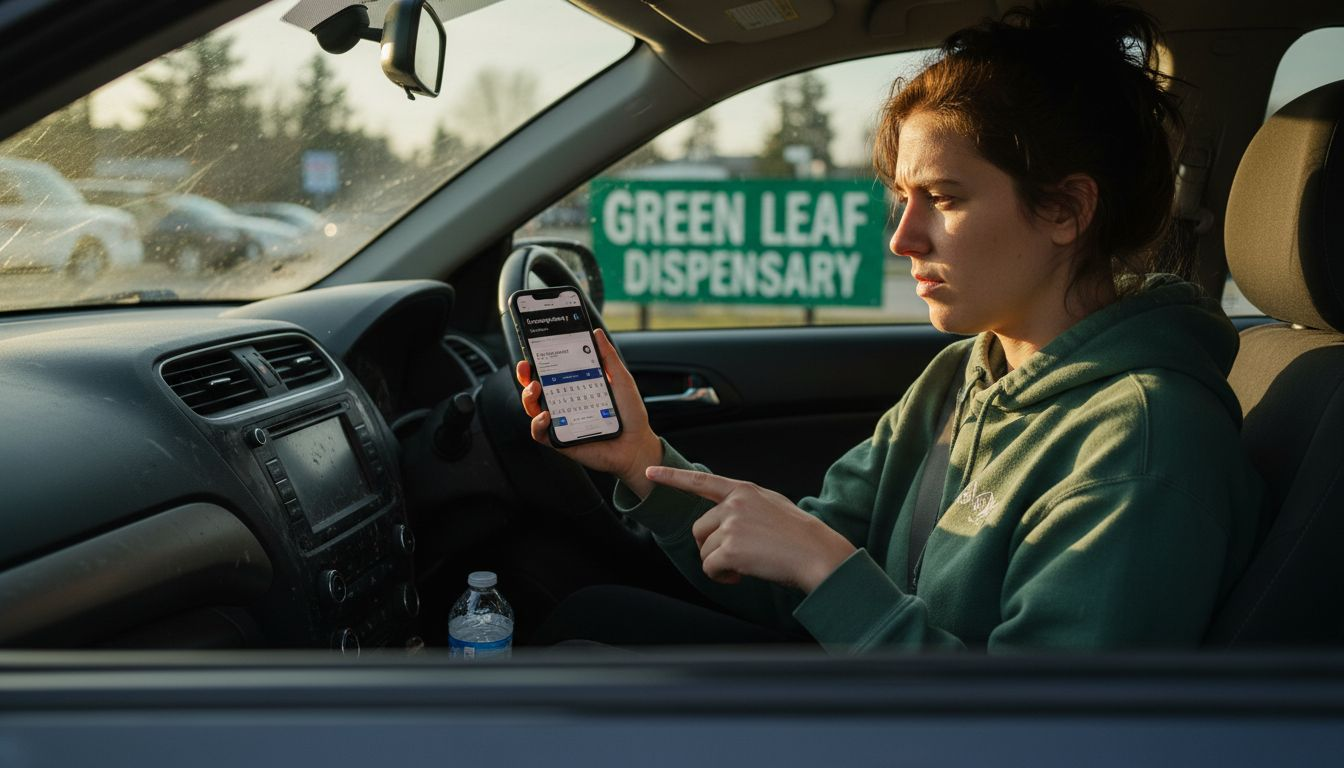
Voice searches differ markedly from typed queries. Users speak naturally, asking complete questions like “Where’s the closest dispensary with high CBD strains near me?” instead of typing fragmented keywords. These conversational queries show strong local intent and immediate action signals.
Dispensaries that boost local SEO for cannabis dispensaries through voice optimization see dramatic results. Studies show 30 to 50% increases in website traffic and map pack rankings after implementing voice search strategies. The impact on foot traffic can be equally substantial.
Key benefits of voice search optimization for dispensaries include:
Understanding this shift is critical for local SEO success in 2026. Voice search represents over half your mobile audience, and that percentage continues growing as smart speakers and voice assistants become ubiquitous.
Voice search ties directly to mobile usage patterns among cannabis consumers. Nearly 85% of dispensary traffic comes from mobile devices, where voice queries dominate local search behavior. Users rely on voice when driving, multitasking, or seeking quick answers about nearby dispensary options.
This mobile local connection creates unique opportunities. Voice searchers typically want immediate information about hours, location, product availability, or directions. They’re further along in the buying journey compared to broad research queries.
Search intent shifts dramatically with voice. Typed searches might use shorthand like “dispensary deals,” while voice queries expand to “What dispensaries near me have deals on flower today?” This natural language includes context clues about user needs and purchase readiness.
SEO strategy must adapt to these conversational patterns. Traditional keyword stuffing fails completely with voice search. Instead, content needs to:
Optimizing local presence becomes paramount. Your Google Business Profile optimization directly impacts voice search visibility since assistants pull information from Google Maps and business listings. Incomplete or inaccurate profiles essentially eliminate you from voice search results.
Dispensaries that boost Google Maps ranking for cannabis businesses capture a disproportionate share of voice traffic. Map pack positions one through three receive the vast majority of voice assistant recommendations.
Pro Tip: Record yourself asking questions about dispensaries naturally, then analyze the language patterns. This reveals the conversational phrases your SEO content should target.
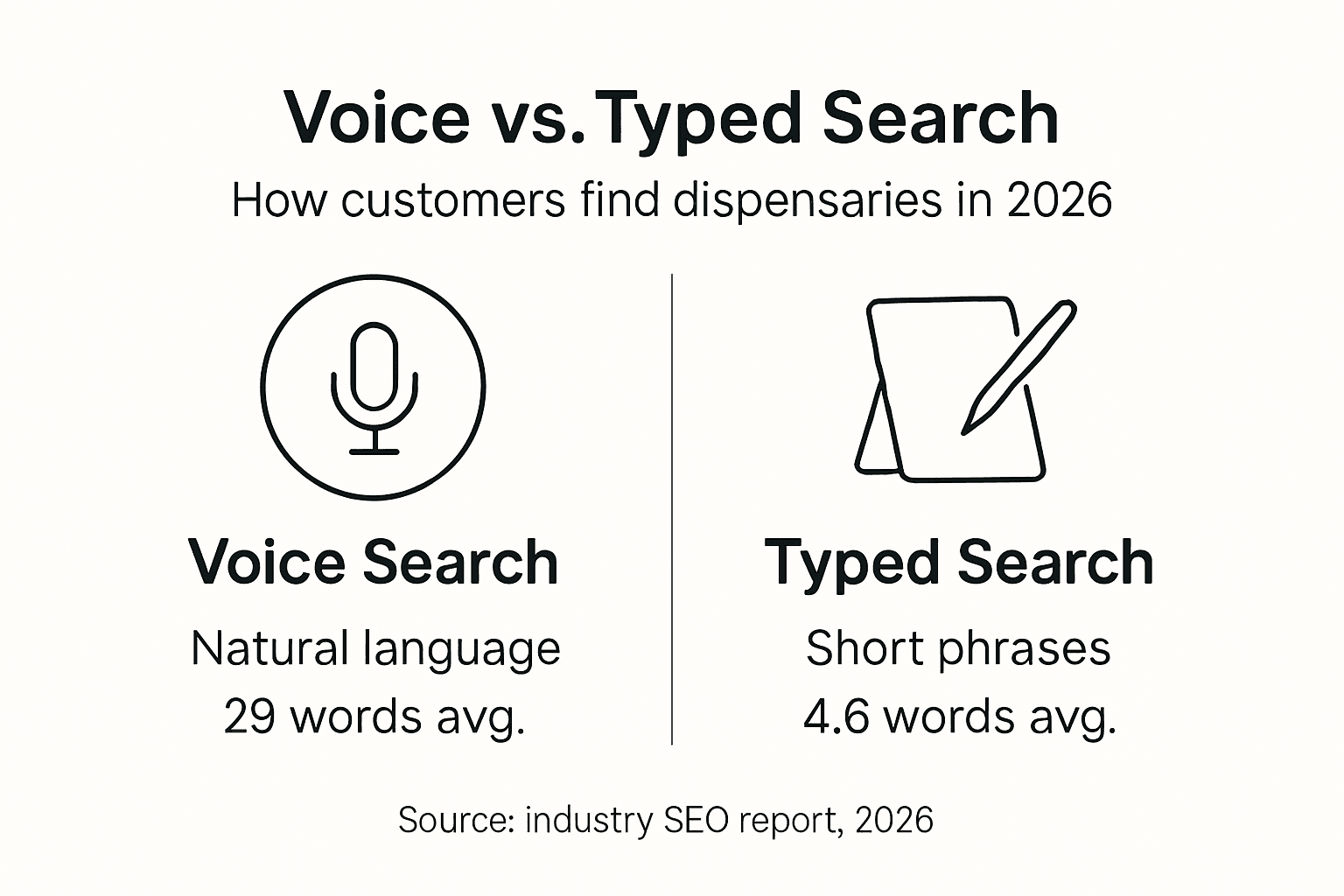
Voice and typed searches operate fundamentally differently. Average voice search queries run 29 words long, compared to just 4.6 words for typed searches. This massive length difference reflects natural speech patterns versus abbreviated typing.
| Search Type | Average Length | Format | Example |
|---|---|---|---|
| Typed | 4.6 words | Keywords | dispensary deals Denver |
| Voice | 29 words | Full questions | What dispensaries in Denver have the best deals on edibles this week and are open past 8pm? |
| Intent | Varies | Research or action | High purchase intent |
| Device | Desktop/mobile | Mobile dominant | 85% mobile for voice |
Voice queries take the form of complete questions or commands. Users ask “How do I find a dispensary with lab tested products near me?” instead of typing “lab tested dispensary.” This natural language requires different content optimization approaches.
SEO implications shift dramatically:
Keyword stuffing actively harms voice search performance. Google’s natural language processing easily identifies unnatural repetition. Instead, optimizing cannabis content for voice search means writing for humans first, with clear answers to common questions.
Technical content structure matters enormously. Headers, lists, and tables help voice assistants extract specific information to answer queries. The easier your content is to parse programmatically, the more likely it appears in voice results.
Pro Tip: Create a spreadsheet of common customer questions from phone calls, emails, and in store conversations. These real questions become your voice search content roadmap.
Technical optimization forms the foundation of voice search success. Schema markup gives search engines structured data about your dispensary, making it easier for AI assistants to understand and present your information. Implement LocalBusiness schema with specific cannabis related details.
Mobile friendliness isn’t optional. Voice searches happen primarily on mobile devices, and Google prioritizes mobile optimized sites in results. Your site must load quickly, display properly on small screens, and provide easy navigation without pinch zooming or horizontal scrolling.
Google Business Profile optimization directly impacts voice search visibility. 46% of voice searches have local intent, making Google Maps and your business listing critical ranking factors. Voice assistants pull information directly from these profiles when answering location based queries.
Essential GBP optimization steps include:
Incorporate voice friendly keywords naturally into your GBP description. Instead of “premium cannabis products,” try “We offer high quality flower, edibles, concentrates, and CBD products for medical and recreational customers.” This conversational approach matches how people actually speak.
The importance of Google Business Profile for voice search cannot be overstated. An incomplete or outdated profile essentially removes you from voice assistant recommendations. Competitors with optimized profiles capture your potential customers.
Local SEO factors compound with voice search. Citations, local backlinks, and consistent NAP information across directories all signal legitimacy to search engines. These traditional boost local SEO techniques become even more important for voice visibility.
Pro Tip: Set a monthly calendar reminder to audit your Google My Business profile. Check for accuracy, add new photos, post updates, and respond to recent reviews. Consistent activity signals relevance to Google’s algorithms.
Many dispensary owners misunderstand voice search optimization, leading to missed opportunities. The biggest myth is that voice SEO simply means stuffing more keywords into existing content. In reality, voice search requires fundamentally different content structure, technical preparation, and strategic approaches.
Another common misconception treats voice search as optional or a future concern. However, ignoring voice search can cost dispensaries up to 40% of local customers right now in 2026. With over half of mobile local searches using voice, waiting means losing market share daily to competitors who optimize.
Some believe traditional SEO techniques automatically work for voice search. This oversimplification ignores critical differences:
Dispensaries often assume voice search optimization is too technical or expensive. While technical elements exist, basic optimization starts with simple content improvements and GBP updates that any business can implement. The ROI from captured voice traffic typically justifies modest investment quickly.
The myth that voice search only matters for national brands hurts local dispensaries most. Voice search heavily favors local businesses through map pack results and location based queries. Small dispensaries with optimized local presence often outrank larger competitors in voice results.
Some owners believe cannabis restrictions prevent voice search optimization. While advertising faces limitations, organic SEO including voice optimization remains fully available. The local SEO improvements that boost voice visibility face no platform restrictions.
Pro Tip: Start voice optimization with three simple steps. First, claim and complete your Google Business Profile fully. Second, add an FAQ page answering common customer questions naturally. Third, implement basic LocalBusiness schema markup. These foundational changes capture immediate voice traffic without requiring advanced technical skills.
Tracking voice search performance requires specific measurement approaches. Unlike traditional SEO where keyword rankings provide clear metrics, voice search measurement focuses on traffic sources, user behavior, and conversion patterns from voice driven visits.
Implement these tracking methods to measure voice search impact:
UTM tracking proves particularly valuable. 68% of dispensaries lack UTM parameters on their Google Business Profile links, preventing accurate voice traffic measurement. This oversight makes it impossible to calculate ROI from voice optimization efforts.
Google Analytics reveals voice search patterns through query analysis. Look for increases in questions, longer search phrases, and mobile traffic spikes after implementing voice strategies. These signals indicate growing voice search capture even without explicit voice search labels.
Keyword tracking shifts from rankings to question variations. Rather than tracking position for “Denver dispensary,” monitor whether you appear for “What’s the best dispensary in Denver for first time buyers?” and similar natural language queries.
Regular analysis enables continuous improvement. Review analytics and tracking for voice search monthly, identifying which content pieces capture voice traffic and which queries drive conversions. Double down on successful approaches while refining underperforming areas.
A/B testing different content formats reveals what resonates with voice searchers. Try FAQ sections versus conversational paragraphs, test different heading structures, and compare performance of various answer lengths.
Pro Tip: Create a simple spreadsheet tracking month over month changes in mobile traffic, map views, direction requests, and phone calls from your Google Business Profile. These metrics collectively indicate voice search performance even when you can’t isolate voice traffic explicitly.
Advanced voice search optimization targets AI answer engines and zero click results. Schema markup and structured data become critical at this level, enabling Google Assistant, Siri, and Alexa to extract and present your information directly without requiring users to visit your site.
Featured snippets represent prime voice search real estate. Cannabis dispensaries optimized for voice search appear more frequently in zero click and AI answer snippet results. These position zero results capture voice traffic before users ever see traditional search results.
Implement these advanced tactics:
Case studies demonstrate measurable impact. One Colorado dispensary group implemented voice search optimization across five locations in early 2025. Within six months, they saw 43% increases in foot traffic from mobile users and 67% growth in map pack impressions.
Another California dispensary focused on FAQ content and structured data. Their investment in proven cannabis SEO strategies for voice search resulted in featured snippets for 23 high value local queries. Phone calls from Google Business Profile increased 89% year over year.
| Strategy Component | Traditional SEO | Voice Search SEO | Impact Difference |
|---|---|---|---|
| Content length | Variable | 40 to 60 words for answers | Higher snippet capture |
| Question targeting | Indirect | Direct FAQ format | 3x more voice appearances |
| Schema markup | Optional | Essential | 2x better AI extraction |
| Local signals | Important | Critical | 46% of voice has local intent |
Voice search optimization differentiates competitive dispensaries in saturated markets. When three dispensaries sit on the same block, the one optimized for voice captures a disproportionate share of mobile local searches.
Advanced technical implementation includes speakable schema, which marks specific content sections as optimized for text to speech. While still emerging, early adopters gain advantages as voice assistants increasingly rely on these signals.
Pro Tip: Audit your top 20 competitors’ voice search presence by asking Siri, Google Assistant, and Alexa questions about dispensaries in your area. Note which businesses appear most frequently and reverse engineer their optimization approaches.
Voice search optimization is essential for dispensary SEO success and local visibility in 2026. The data proves overwhelming, with over 50% of local mobile searches using voice and optimization efforts delivering 30 to 50% traffic increases. Dispensaries that ignore voice search face substantial competitive disadvantages.
Effective voice search strategies combine technical SEO, conversational content creation, and thorough Google Business Profile optimization. These elements work together to capture the growing percentage of customers using voice assistants for local dispensary searches.
Key implementation priorities include:
Ignoring voice search in 2026 means missing up to 40% of potential local customers. Competitors who optimize capture this traffic while unprepared dispensaries lose market share daily. The proven cannabis SEO strategies that work for voice search deliver measurable ROI through increased foot traffic and revenue.
Start implementing voice search optimization today. Begin with foundational steps like completing your Google Business Profile and adding FAQ content, then progress to advanced tactics like schema markup and featured snippet optimization. Continuous improvement and regular tracking sustain long term competitive advantages in local search visibility.
Ready to capture the 50% of local searches using voice queries? Partner with Dope SEO to implement proven voice search optimization strategies tailored specifically for cannabis dispensaries. Our team specializes in navigating the unique challenges of cannabis marketing, from platform restrictions to local competition.
We help dispensaries increase local visibility, capture more map pack traffic, and convert voice searchers into loyal customers. Our approach combines technical SEO excellence with content strategies that match natural language search patterns, ensuring your dispensary appears when customers ask voice assistants for recommendations.
Master cannabis SEO best practices with expert guidance. From dispensary website optimization to ongoing cannabis SEO proven strategies, we deliver measurable results. Contact Dope SEO today to start dominating voice search results in your local market.
Voice search drives more mobile local queries, increasing visibility in map packs and zero click results that dispensaries can capture. This directly boosts foot traffic and customer leads. Over 50% of mobile searches now use voice, making optimization essential for competitive local rankings.
Ensure complete and accurate NAP information, incorporate conversational keywords in descriptions, update hours regularly, and respond to reviews to enhance voice search visibility. Add high quality photos, select all relevant categories, and post frequent updates. These signals help voice assistants recommend your dispensary confidently.
Use UTM parameters on Google Business Profile links, set up voice search specific queries in analytics tools, and monitor local ranking improvements and foot traffic growth. Segment mobile traffic in Google Analytics and track increases in question based long tail keywords. Survey in store customers about discovery methods to validate digital metrics.
Avoid treating voice search like traditional SEO, neglecting Google Business Profile optimization, missing structured data, and skipping voice query analytics tracking. Don’t stuff keywords or ignore mobile speed. Focus on natural language content, complete business information, and regular performance measurement instead.

© 2026 Curious Monkeys Pressing Buttons LLC DBA Cannabiz Marketing Solutions AKA DopeSEO. All rights reserved.