
Cannabis businesses face a visibility crisis. Strict advertising regulations across platforms like Google and Meta make paid ads nearly impossible, forcing brands to rely on organic SEO and local search optimization. This guide delivers step-by-step strategies to boost your online presence, navigate regulatory hurdles, and drive measurable traffic growth within months.
| Point | Details |
|---|---|
| Tailored SEO strategies | Cannabis businesses using tailored SEO strategies see organic traffic increase by 40% within six months. |
| Local search optimization | Optimizing local search presence drives approximately 25% more foot traffic to dispensaries. |
| Compliant content marketing | Educational content avoids platform penalties while improving engagement and search rankings. |
| Common SEO mistakes | Keyword stuffing and ignoring mobile optimization can cause ranking penalties and traffic loss. |
| Measurable results | SEO success typically appears within 4-6 months through tracked metrics like traffic and conversions. |
Before diving into SEO strategies, you need a solid foundation. Without these basics, even the best tactics will struggle to deliver results.
Start with a mobile-optimized website. Mobile-optimized websites prevent up to 30% loss of potential traffic, making responsive design non-negotiable. Your site must load fast, display properly on all devices, and provide seamless navigation. Test your site on multiple screen sizes and browsers before launching any SEO campaign.
Next, claim and verify your Google Business Profile. This free tool is your gateway to local search visibility. Without it, you’re invisible in Google Maps and local pack results where customers search for nearby dispensaries. Verification takes a few days, so handle this immediately.
Pro Tip: Cannabis advertising regulations vary by state and platform. Familiarize yourself with current rules to avoid wasted effort and potential penalties. What works in California might violate regulations in Texas.
You’ll also need AI-driven SEO tools specialized for cannabis keyword research. Generic tools often miss industry-specific compliance issues and regional variations. Invest in platforms that understand cannabis terminology and regulatory constraints. These tools help identify high-volume keywords that won’t trigger platform restrictions.
Finally, set realistic expectations. SEO is a long-term game, not a quick fix. Organic visibility builds gradually as search engines recognize your authority and relevance. Plan for at least six months of consistent effort before expecting major results. This commitment separates successful cannabis brands from those that give up too early. Understanding cannabis brand visibility online helps frame realistic goals and timelines.
Your SEO journey starts with understanding where you stand and identifying the right keywords to target.
Begin with a thorough SEO audit focusing on cannabis-specific compliance and current rankings. This isn’t a generic website checkup. You need to identify technical issues, content gaps, and compliance vulnerabilities that could trigger platform penalties. Check page speed, broken links, duplicate content, and mobile responsiveness. Document your current keyword rankings and organic traffic baseline.
Use AI-powered tools to identify compliant, high-volume cannabis keywords. These tools analyze search patterns while filtering out terms that violate advertising policies. Prioritizing compliant cannabis keywords helps prevent platform penalties and improves ranking. Focus on educational terms like “CBD benefits” or “cannabis dosage guide” rather than direct product promotions.
Follow these steps for effective keyword research:
Analyze competitors’ local and niche keyword strategies to find opportunity gaps. Your competitors are already ranking for valuable terms you might miss. Study their content structure, meta descriptions, and internal linking patterns. Look for topics they’ve neglected or covered poorly where you can provide better information.
Pro Tip: Avoid keyword stuffing at all costs. Naturally integrate keywords into your content where they make sense contextually. Forced or excessive keyword use triggers Google penalties and damages user experience.
Focus keyword prioritization on local search intent and user relevance. Someone searching “cannabis delivery Los Angeles” has different intent than “what is THC.” Match your content strategy to these intent patterns. Leverage AI-driven SEO for cannabis brands and follow cannabis SEO best practices to maximize your keyword research effectiveness.
Local search drives foot traffic to dispensaries. Without proper optimization, you’re leaving customers and revenue on the table.
Fully claim and optimize your Google Business Profile with accurate NAP details. NAP stands for Name, Address, Phone number, and consistency across all platforms is critical. Any variation confuses search engines and hurts your rankings. Use the exact same format everywhere: your website, directories, social profiles, and citations.
60% of cannabis businesses neglect Google Business Profile optimization, missing key local SEO benefits. Don’t be part of this statistic. Add high-quality photos, complete business hours, service descriptions, and relevant categories. Update your profile weekly with posts about new products, events, or educational content.
Encourage and manage customer reviews to boost local rankings. Reviews signal trust and relevance to Google. Positive reviews improve your visibility in local pack results and increase click-through rates. Respond professionally to all reviews, especially negative ones. A thoughtful response to criticism demonstrates customer care and can even convert unhappy customers into advocates.
Implement these local optimization tactics:
| Local SEO Factor | Impact on Rankings | Action Priority |
|---|---|---|
| Google Business Profile | Very High | Complete and update weekly |
| Customer Reviews | High | Request reviews, respond to all |
| NAP Consistency | High | Audit and fix discrepancies |
| Local Citations | Medium | Build 20-50 quality citations |
| Website Schema | Medium | Add LocalBusiness markup |
Track local ranking factors influencing dispensary visibility. Google considers proximity, relevance, and prominence when ranking local results. You can’t change your location, but you can improve relevance through keyword optimization and prominence through reviews and citations. Understanding Google Maps optimization for dispensaries and implementing a solid local search strategy for dispensaries accelerates your local visibility gains.

Content is your most powerful tool for building organic visibility while staying compliant with advertising restrictions.
Focus on creating informative, educational blog posts about hemp and cannabis benefits. Educational content positions you as an authority while avoiding direct product promotion that violates platform policies. Write about topics your customers actually search for: dosage guides, consumption methods, strain differences, legal updates, and health benefits.
Avoid direct product promotions that violate advertising platform policies. Instead of “Buy our premium CBD oil,” write “Understanding CBD oil concentration and quality standards.” Educational content avoids direct product promotion restrictions and fosters longer organic engagement. This approach satisfies platform rules while still guiding customers toward your products naturally.
Integrate SEO keywords naturally into FAQs, resource pages, and articles. Answer real questions your customers ask. Create detailed guides that solve specific problems. Use headers, bullet points, and short paragraphs to improve readability and engagement. Every piece of content should target specific keywords while providing genuine value.
Develop these content types for maximum SEO impact:
Leverage content depth to improve site authority and search rankings. Google rewards websites that demonstrate expertise, authority, and trustworthiness. Longer, well-researched articles typically outrank thin content. Aim for 1,500 to 2,500 words on pillar topics, with supporting articles in the 800 to 1,200 word range.
Plan a content calendar to maintain consistent publication and user engagement. Consistency signals to search engines that your site is active and relevant. Publish at least one high-quality article per week. Schedule content around industry events, seasonal trends, and customer questions. Learn more about optimizing cannabis content to maximize your content marketing ROI.
Technical optimization directly impacts user experience and conversion rates. Even great content fails without solid technical foundations.
Ensure ecommerce sites are fast-loading and mobile-responsive. Page speed affects both user experience and search rankings. Compress images, enable browser caching, and minimize code to achieve load times under three seconds. Test your site speed regularly and fix issues immediately. Mobile responsiveness isn’t optional, over 60% of cannabis searches happen on mobile devices.
Technical SEO improvements in ecommerce sites can accelerate conversion rates by 20% post-optimization. This boost comes from better user experience, clearer navigation, and faster checkout processes. Every technical improvement removes friction that prevents conversions.
Use structured data markup for cannabis product pages to enhance search rich results. Schema markup helps search engines understand your product details, pricing, availability, and reviews. This can earn you rich snippets in search results, increasing click-through rates. Implement Product, LocalBusiness, and Organization schemas at minimum.
Align SEO with user journey optimizing navigation and call-to-action points. Map your customer journey from awareness to purchase. Ensure your site architecture guides visitors logically through this journey. Place clear calls to action at decision points. Remove obstacles like confusing menus, broken links, or unclear product information.
Implement these technical optimizations:
| Platform Type | Pros | Cons | Best For |
|---|---|---|---|
| Native Ecommerce | Full control, customization, data ownership | Higher development cost, maintenance | Established brands with technical resources |
| Third-Party Platforms | Quick setup, lower cost, built-in features | Limited customization, platform fees | New businesses testing market fit |
Compare benefits of native ecommerce platforms versus third-party integrations based on your business needs and resources. Leverage AI-driven SEO tools to improve site structure and keyword alignment. These tools identify technical issues automatically and suggest optimizations. Explore cannabis ecommerce for dispensaries and compare native vs 3rd party ecommerce options to make informed platform decisions.
Even well-intentioned SEO efforts can backfire. Recognizing and fixing common mistakes protects your rankings and visibility.
Avoid keyword stuffing as it can lead to significant ranking penalties. Keyword stuffing can cause up to 15% ranking penalties on Google. Write naturally for humans first, search engines second. Keywords should flow seamlessly within your content, not appear forced or repetitive.
Do not neglect mobile optimization to prevent losing up to 30% of traffic. Mobile users have different behaviors and expectations than desktop users. They want instant information and easy navigation. Test your mobile experience regularly and fix issues like tiny text, unclickable buttons, or horizontal scrolling.
Regularly audit content for compliance with latest cannabis advertising regulations. Rules change frequently across states and platforms. What was compliant last year might violate current policies. Schedule quarterly compliance audits to review your content, keywords, and promotional language. Remove or update anything that risks penalties.
Pro Tip: Set up Google Search Console alerts to catch technical issues immediately. Monitor your error reports weekly and fix crawl errors, mobile usability problems, and security issues promptly.
Avoid these critical mistakes:
Monitor your Google Business Profile actively and respond to negative reviews promptly. Unaddressed negative reviews damage your reputation and discourage potential customers. Respond within 24 hours with empathy and a solution. Even if you can’t satisfy that customer, others see your professionalism.
Maintain consistent NAP data to avoid local SEO confusion. Inconsistent business information across platforms dilutes your local search authority. Audit your citations quarterly and correct any variations in your name, address, or phone number. Learn from top cannabis SEO mistakes to avoid common pitfalls that undermine your visibility efforts.
Understanding what success looks like helps you stay motivated and adjust your strategy based on real data.
Organic traffic can increase by an average of 40% within six months of tailored SEO adoption. This growth comes from improved rankings, better content, and enhanced user experience. Some businesses see results faster, others slower, depending on competition and starting point. Consistency matters more than perfection.
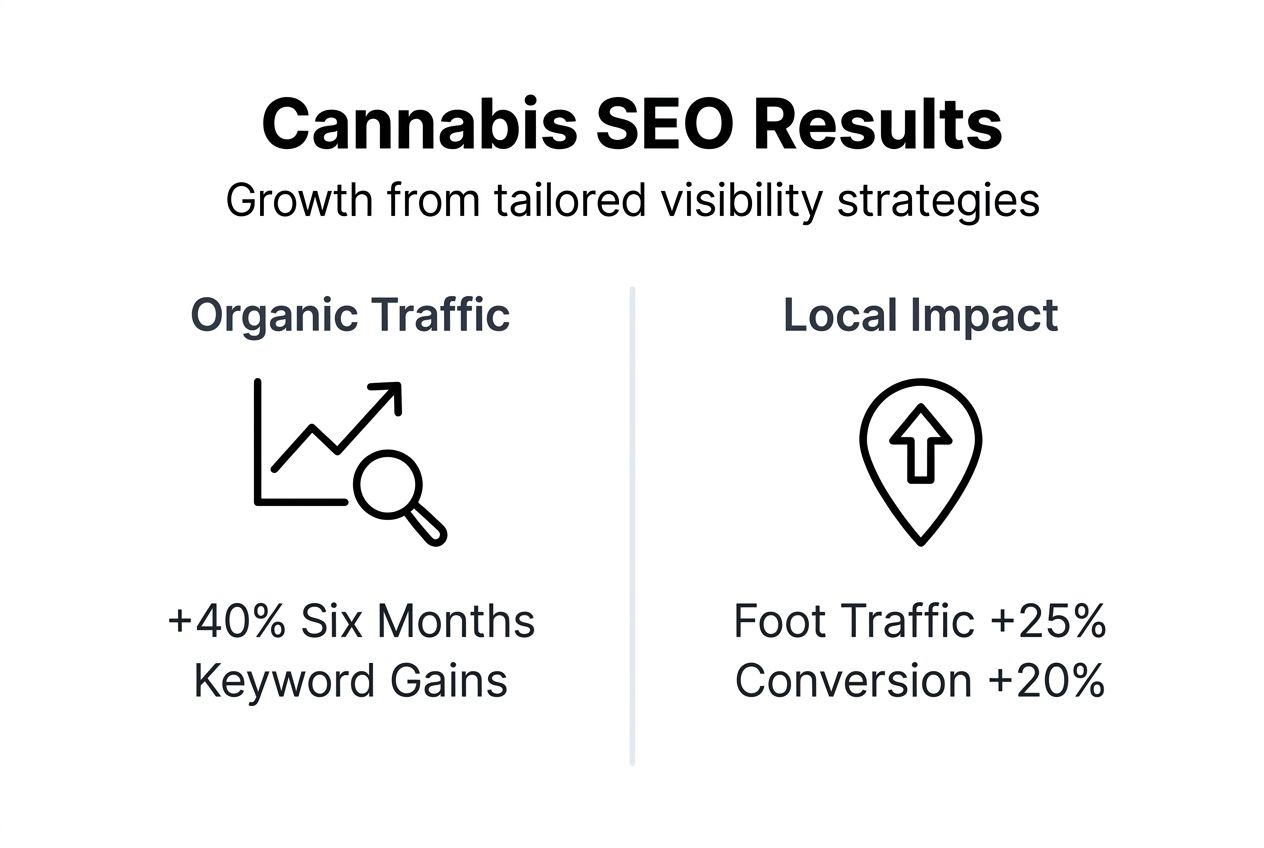
Local search optimization typically boosts dispensary foot traffic by around 25% within three months. Local visibility improvements happen faster than organic search because you’re competing in a smaller geographic area. Optimized Google Business Profiles and positive reviews drive this traffic increase directly.
Ecommerce conversion rates improve approximately 20% faster after SEO integration. Technical SEO improvements in ecommerce sites can accelerate conversion rates by 20% through better user experience and clearer calls to action. Faster page speeds, mobile optimization, and simplified navigation all contribute to higher conversions.
Keyword ranking visibility shows noticeable advancement within four to six months. SEO improvements generally appear within 4 to 6 months after optimization efforts. You’ll see some keywords move quickly while others take longer. Focus on the overall trend, not individual keyword fluctuations.
| Metric | Baseline | 3 Months | 6 Months | Measurement Tool |
|---|---|---|---|---|
| Organic Traffic | Current visitors/month | +15-25% | +35-45% | Google Analytics |
| Local Searches | Current impressions | +20-30% | +40-50% | Google Business Profile |
| Keyword Rankings | Current positions | +5-10 positions | +10-20 positions | Rank tracking tools |
| Conversion Rate | Current percentage | +8-12% | +15-25% | Google Analytics |
| Review Count | Current reviews | +10-15 reviews | +25-40 reviews | Google Business Profile |
Track KPIs like organic traffic, local searches, conversion rates, and review growth regularly. Set up monthly reporting to monitor progress and identify trends. Use Google Analytics for traffic data, Google Search Console for search performance, and your Google Business Profile for local metrics. These tools provide the insights you need to refine your strategy and prove ROI.
Implementing these strategies takes time and expertise. Professional cannabis SEO services accelerate compliance and improve rankings by applying proven tactics specific to your industry. Experienced agencies understand regulatory nuances and platform restrictions that generalists miss.
Leverage proven strategies tailored to dispensaries and local markets. Optimize ecommerce and technical SEO with expert guidance. Partnering with specialized SEO professionals saves time and boosts ROI by avoiding costly mistakes and accelerating results. Explore detailed guides on boosting cannabis SEO strategies, implementing a local search strategy guide, and maximizing cannabis ecommerce optimization to scale your business online effectively.
Most cannabis SEO efforts show meaningful results within four to six months, depending on competition and compliance factors. SEO improvements generally appear within 4 to 6 months after optimization efforts begin. Consistent optimization with quality content and technical improvements accelerates ranking improvements. Local search results often appear faster, within two to three months, while competitive organic rankings take longer to establish.
Create educational, non-promotional content focused on informing rather than selling products directly. Regularly update your knowledge on platform ad policies and geo-specific rules that vary by state. Avoid keyword stuffing and use natural inclusion of cannabis-related terms that don’t trigger platform restrictions. Review cannabis content compliance tips quarterly to stay current with evolving regulations and platform policies.
Optimizing your Google Business Profile and maintaining consistent NAP data improves local search rankings significantly. Encouraging positive reviews elevates trust and attracts nearby customers searching for dispensaries. Regular content updates and accurate local listings boost visibility in maps and local search results. Learn more about Google Maps optimization and implementing a comprehensive local search strategy to drive measurable foot traffic increases.
Keyword stuffing causes algorithm penalties that can drop your rankings significantly. Ignoring mobile site optimization leads to traffic loss of up to 30% from mobile users. Neglecting your Google Business Profile reduces local visibility and misses opportunities for customer engagement. Failing to adapt to evolving cannabis advertising rules risks platform sanctions and wasted marketing investments. Review common cannabis SEO mistakes to protect your rankings and avoid costly errors.

© 2026 Curious Monkeys Pressing Buttons LLC DBA Cannabiz Marketing Solutions AKA DopeSEO. All rights reserved.