
Cannabis website compliance feels like navigating a maze blindfolded. You want to attract customers and rank on Google, but you also worry about breaking rules you barely understand. Many cannabis business owners confuse compliance with simply slapping an age gate on their homepage, missing critical regulations around content, accessibility, and marketing claims. This guide cuts through the confusion. You’ll learn exactly what compliant website design means for your cannabis business, which regulations actually matter, and how to build a site that satisfies regulators while engaging customers and climbing search rankings.
| Point | Details |
|---|---|
| Compliant design importance | Compliant design means building a site that follows federal and state rules, advertising guidelines, and accessibility laws while pursuing marketing goals. |
| Regulatory requirements | Key rules include age verification, content restrictions, privacy policies, terms of service, and accessible design standards. |
| Age verification focus | Age gates must verify identity and prohibit access to under 21 content before any cannabis information is shown. |
| Accessibility and SEO balance | Accessible design expands reach and aligns with ADA while supporting sustainable search performance through compliant practices. |
| Trust through transparency | Clear disclaimers, product labeling, and contact information build regulator confidence and customer trust. |
Compliant website design for cannabis businesses means building and maintaining a digital presence that adheres to federal restrictions, state-specific cannabis regulations, advertising guidelines, and accessibility laws while still achieving marketing goals. Unlike typical ecommerce sites, cannabis websites operate in a regulatory gray zone where ethical marketing practices determine business survival.
Multiple regulatory bodies scrutinize cannabis websites. State cannabis control boards enforce local marketing rules. The Federal Trade Commission monitors advertising claims. The Americans with Disabilities Act applies accessibility requirements. Payment processors impose their own content restrictions. Each layer adds complexity that generic web designers miss entirely.
Noncompliance carries serious consequences. Regulators can issue fines ranging from thousands to hundreds of thousands of dollars depending on violation severity. State licensing boards may suspend or revoke your cannabis license. Payment processors can freeze accounts or terminate relationships. Search engines might delist your site. Customers lose trust when they encounter unprofessional or legally questionable content. One compliance failure can cascade into business-threatening problems.
Essential compliance elements include prominent legal disclaimers clarifying that statements have not been evaluated by the FDA, accurate product information with proper cannabinoid labeling, comprehensive privacy policies explaining data collection and usage, terms of service outlining user responsibilities, and clear contact information for customer inquiries. These foundational components signal to regulators and customers that your business operates professionally.
Beyond avoiding penalties, compliant design builds customer confidence. Visitors who see professional age verification, clear product information, and transparent policies trust your brand more than competitors with sketchy websites. This trust translates into higher conversion rates, better customer retention, and stronger word-of-mouth referrals. Understanding SEO compliance for cannabis positions your business for sustainable growth rather than risky shortcuts.
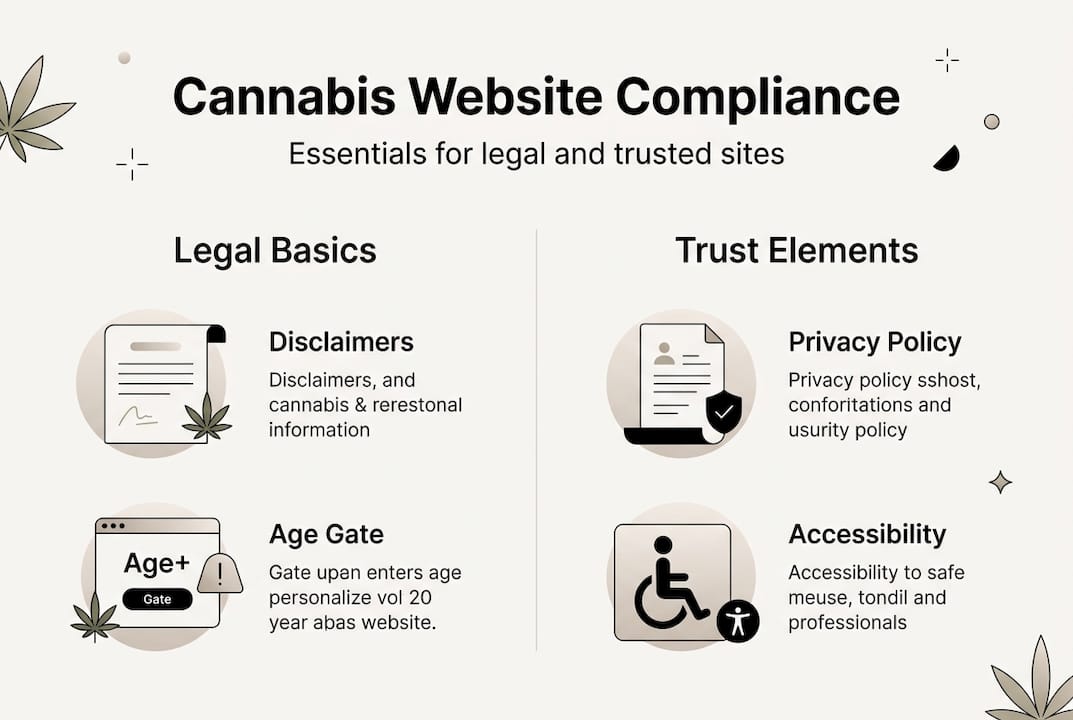
Age verification stands as the most visible compliance requirement for cannabis websites. Federal law and state regulations mandate that cannabis businesses restrict access to adults 21 and older. Effective age gates must appear before users access any cannabis product information or marketing content. Simple “Enter if 21+” buttons fail compliance standards because they lack actual verification.

Robust age verification systems capture birthdates, validate entries against realistic parameters, and store verification records for regulatory audits. Some jurisdictions require identity verification through third-party services that check government databases. Your age gate should trigger on every visit unless you use compliant cookie-based memory. Never allow users to bypass age verification through direct URLs or search engine cached pages.
Content restrictions limit what you can say about cannabis products. Federal law prohibits health claims suggesting cannabis treats, cures, or prevents diseases. You cannot make statements like “cures anxiety” or “treats chronic pain” without FDA approval, which no cannabis product currently holds. State regulations often restrict pricing displays, promotional language, and imagery showing consumption. Some states ban words like “candy” for edibles or require specific warning labels in advertising.
Accessibility compliance ensures visitors with disabilities can navigate and use your website. The Americans with Disabilities Act applies to commercial websites, meaning your cannabis site must accommodate screen readers, keyboard navigation, color contrast requirements, and alternative text for images. Accessibility violations trigger lawsuits, with cannabis businesses facing the same legal exposure as any other industry.
Accessibility improvements also boost SEO performance. Search engines favor sites with clear heading structures, descriptive alt text, fast load times, and mobile responsiveness. These same elements help users with disabilities. Implementing dispensary website optimization strategies naturally improves both accessibility and search rankings.
Pro Tip: Layer your age verification with clear compliance messaging throughout your site. Include disclaimers on product pages, checkout flows, and blog posts. This redundancy protects your business if users bypass the initial age gate through technical means.
Cannabis SEO presents unique challenges because traditional marketing channels reject cannabis advertising. Google Ads, Facebook, and Instagram ban cannabis promotion, forcing businesses to rely on organic search traffic. You need visibility, but aggressive SEO tactics can trigger compliance violations or platform penalties.
Successful cannabis SEO requires strategic on-page optimization that satisfies both search algorithms and regulators. Focus on educational content that informs rather than promotes. Write detailed strain guides, consumption method comparisons, and industry news analysis. Use target keywords naturally in titles, headings, and body content without making prohibited health claims. Structure your site with clear navigation, fast loading speeds, and mobile optimization. These technical factors improve rankings without regulatory risk.
Balancing compliance and marketing goals requires understanding what works and what crosses lines:
| Compliant SEO tactic | Risky practice | Compliance impact |
|---|---|---|
| Educational content about cannabis effects | Health claims about treating conditions | Compliant approach avoids FDA violations |
| Accurate product descriptions with lab data | Promotional language making therapeutic promises | Compliant approach provides transparency |
| Local SEO with verified business information | Fake reviews or manipulated ratings | Compliant approach builds authentic reputation |
| Natural keyword integration in quality content | Keyword stuffing or hidden text | Compliant approach satisfies search algorithms |
| Mobile-optimized, accessible site design | Pop-ups blocking content or poor navigation | Compliant approach improves user experience |
Strategic cannabis SEO means prioritizing user experience alongside regulatory requirements. Search engines reward sites that genuinely help visitors. When you create valuable content that educates customers about cannabis without crossing compliance lines, you naturally attract organic traffic. This approach builds sustainable visibility rather than risky shortcuts that might work temporarily before triggering penalties.
Pro Tip: Treat compliance as a competitive advantage rather than a burden. Most cannabis websites ignore accessibility and proper age verification. By implementing these requirements professionally, you differentiate your brand and capture customers who value legitimate businesses. Regularly update your website content to reflect changing regulations and maintain search relevance.
Compliance requires continuous attention, not a one-time setup. Regulations evolve as states adjust cannabis laws and federal guidance shifts. Your website needs regular audits to identify gaps and implement fixes before regulators notice problems.
Conduct quarterly compliance audits reviewing these critical elements:
Several specialized tools help cannabis businesses maintain compliance. Age verification services like Agechecker.net and AgeVerify provide robust identity validation beyond simple date entry. Accessibility scanning tools such as WAVE and AXE identify technical violations. Compliance management platforms designed for cannabis track regulatory changes and flag potential issues.
| Tool category | Popular options | Key features | Typical cost |
|---|---|---|---|
| Age verification | Agechecker.net, AgeVerify | Database validation, audit logs, customizable gates | $50-200/month |
| Accessibility scanning | WAVE, AXE, Siteimprove | Automated testing, violation reporting, remediation guidance | Free-$500/month |
| Compliance monitoring | Simplifya, Metrc integration | Regulatory tracking, policy templates, training resources | $200-1000/month |
| Content review | Legal counsel, compliance consultants | Manual content audit, claim verification, risk assessment | $150-500/hour |
Document every compliance effort. Maintain records of audit dates, identified issues, remediation actions, and verification of fixes. This documentation protects your business during regulatory inquiries by demonstrating good faith compliance efforts. Regulators distinguish between businesses that ignore requirements and those actively working to meet standards.
Selecting the right digital marketing partner makes compliance management easier. Avoid predatory agencies that promise unrealistic results or use black-hat SEO tactics that risk your license. Look for agencies with specific cannabis industry experience, transparent pricing, and proven track records. Ask potential partners how they handle compliance requirements and request case studies from similar cannabis businesses.
Pro Tip: Create a compliance calendar tracking audit schedules, policy review dates, and regulatory monitoring tasks. Assign responsibility for each item to specific team members. This systematic approach prevents compliance from falling through cracks during busy periods. Your documented compliance program demonstrates professionalism to regulators, investors, and customers.
Navigating cannabis website compliance while building search visibility requires specialized expertise that generic marketing agencies lack. Dope SEO focuses exclusively on cannabis and hemp businesses, understanding the regulatory landscape and platform restrictions that make this industry unique. We help cannabis businesses implement compliant website designs that satisfy regulators without sacrificing customer engagement or search rankings.
Our approach combines ethical digital marketing practices with proven SEO strategies tailored for cannabis. We audit your current website for compliance gaps, implement robust age verification systems, optimize content to avoid prohibited claims, and build technical foundations that improve accessibility and search performance. Unlike agencies that use risky tactics, we prioritize sustainable growth through white-hat methods that protect your business long-term.
We know cannabis business owners face enough challenges without worrying whether their website will trigger regulatory problems. Our team stays current on evolving state regulations, federal guidance, and platform policies affecting cannabis marketing. We translate complex compliance requirements into actionable website improvements that enhance rather than limit your online presence. Whether you operate a dispensary, cultivation facility, or ancillary business, we deliver cannabis digital marketing solutions that build trust and drive qualified traffic. Avoiding predatory practices means partnering with specialists who understand your industry and prioritize your success over quick profits.
The most effective age verification combines date of birth entry with identity validation through third-party databases. Simple “click to confirm” gates fail compliance standards in most jurisdictions. Choose verification services that log attempts, block repeated failures, and provide audit trails for regulatory review.
No. Federal law prohibits health claims suggesting cannabis treats, cures, or prevents diseases without FDA approval. You can describe effects like “relaxing” or “energizing” but cannot claim therapeutic benefits for specific medical conditions. Focus on educational content about cannabinoids and terpenes instead.
Quarterly audits catch most compliance issues before they become problems. Schedule additional reviews whenever regulations change in your operating states or when launching new products or marketing campaigns. Major website redesigns require comprehensive compliance audits before going live.
Penalties vary by jurisdiction and violation severity. State regulators can issue fines from $5,000 to $250,000, suspend licenses temporarily, or revoke licenses permanently. Federal agencies may pursue enforcement for egregious violations. Payment processors terminate relationships. Search engines can delist sites. Customer lawsuits over accessibility violations add another risk layer.
Yes. The Americans with Disabilities Act applies to commercial websites including cannabis businesses. Courts consistently rule that websites must accommodate visitors with disabilities. Implementing proper SEO compliance includes accessibility features that also improve search rankings and user experience for all visitors.
Absolutely. Each state with legal cannabis imposes unique marketing restrictions, content requirements, and operational rules. Multi-state operators need geotargeting to display state-specific disclaimers, product information, and age verification. Work with compliance experts familiar with every jurisdiction where you operate.
