
TL;DR:
- Cannabis SEO is crucial for local dispensaries due to advertising restrictions on major platforms.
- Building local authority, optimizing pages, and gathering reviews are key for rankings.
- Consistent, compliant efforts over time outperform sporadic or outdated tactics.
Local cannabis dispensaries face one of the most competitive online landscapes of any retail business. You cannot run Google Ads. You cannot boost posts on many major platforms. Yet customers are searching for dispensaries near them every single day, and the dispensaries that show up first get the walk-ins, the calls, and the sales. Mastering cannabis SEO is the single most reliable way to win that visibility, grow organic traffic, and build a customer base that finds you without you spending a dollar on paid ads. This guide walks you through every step.
| Point | Details |
|---|---|
| SEO is critical | Strong cannabis SEO attracts more local customers and drives dispensary foot traffic. |
| Compliance matters | Always follow legal guidelines to avoid penalties or loss of rankings. |
| Preparation is key | Set up a strong technical foundation before optimizing your site. |
| Focus on reviews | Encourage Google reviews to boost local SEO and map rankings. |
| Track your progress | Use analytics tools to measure and adapt your SEO strategies effectively. |
Now that you see what improved rankings can mean, let’s start by understanding what makes cannabis SEO special.
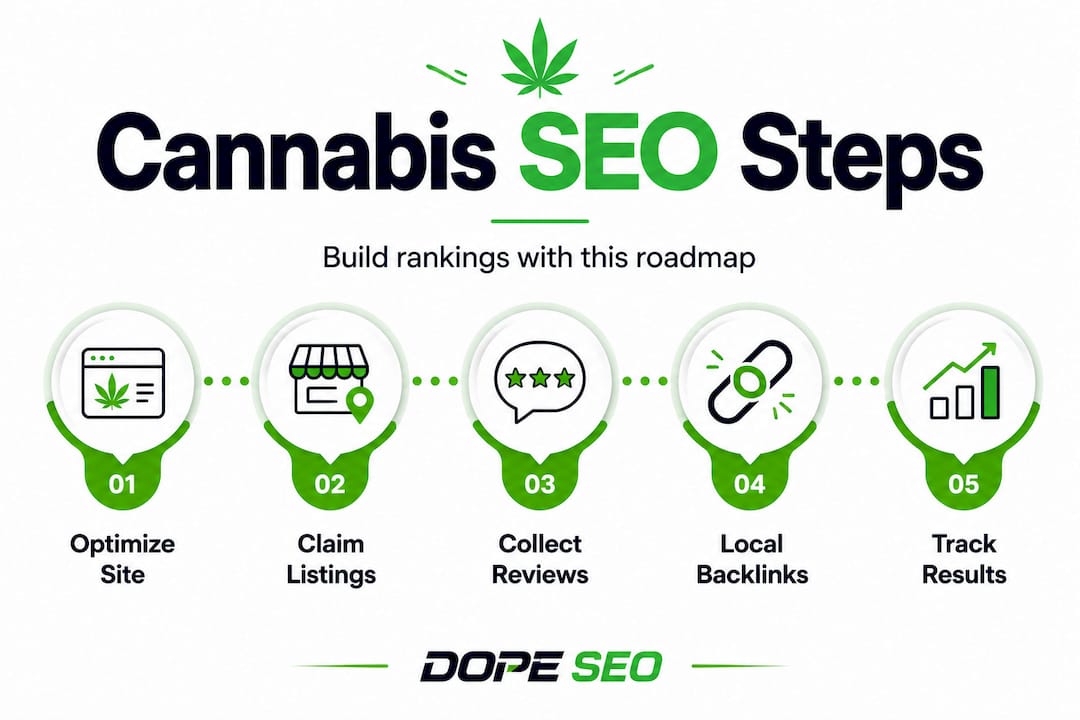
Cannabis SEO shares the same technical foundations as standard SEO, but the rules of the game are dramatically different. Federal restrictions limit which platforms will accept cannabis advertising, which means your organic search presence is not just a nice-to-have. It is your primary growth channel. As explored in this 2026 cannabis SEO guide, dispensaries must build authority the old-fashioned way: through consistent content, clean technical infrastructure, and a strong local footprint.
There are five core pillars every dispensary needs to address:
Ignore these pillars and you will not just plateau. You will slide. Google regularly updates its quality guidelines, and dispensaries that rely on outdated tactics or non-compliant content find themselves penalized or deindexed. Understanding cannabis SEO best practices upfront prevents costly mistakes later.
Here is a quick comparison of how standard SEO differs from cannabis-specific SEO:
| Factor | Standard SEO | Cannabis SEO |
|---|---|---|
| Paid advertising support | Google Ads, Facebook Ads available | Largely prohibited on major platforms |
| Keyword restrictions | None | Must avoid federally restricted terms |
| Content compliance | General legal guidelines | State-specific rules, age gating required |
| Backlink sources | Broad industry options | Limited to compliant, cannabis-friendly sources |
| Platform listings | Any directory | Specialized (Weedmaps, Leafly, Yelp) |
| Review platforms | Google, Yelp, Trustpilot | Google + cannabis-specific platforms |
Knowing these differences is what separates dispensaries that grow their organic traffic year over year from those that spin their wheels wondering why nothing works.
With the basics covered, it’s time to ensure you have everything in place to get the best results from SEO.

Before you optimize a single page, your foundation needs to be solid. Skipping the preparation phase is one of the most common reasons dispensary SEO campaigns stall before they show results.
Here is your readiness checklist, step by step:
Pro Tip: Do not overlook secondary directories. Listing your dispensary accurately on Weedmaps, Leafly, and local chamber of commerce directories builds local citation authority that directly supports your Google map-pack rankings. Consistency matters. Your business name, address, and phone number (called NAP) must be identical across every listing.
| Tool or platform | Purpose | Priority |
|---|---|---|
| Google Search Console | Track rankings, crawl issues, indexing | Essential |
| Screaming Frog | Full site technical audit | High |
| Google Business Profile | Local map-pack visibility | Essential |
| Weedmaps listing | Industry authority, citations | High |
| Leafly listing | Consumer trust, secondary traffic | High |
| PageSpeed Insights | Load time diagnosis | Medium |
Getting these fundamentals right takes a few days of focused work. But they are the difference between an SEO strategy that compounds over time and one that never gets off the ground.
Once you’re prepared, follow these step-by-step actions to noticeably boost your dispensary’s rankings.
This is where the real work happens. Each action below is ordered from foundational to advanced, so you can work through them progressively without feeling overwhelmed.
Research compliant, high-intent keywords. Use tools like Google Keyword Planner, Semrush, or Ahrefs to identify what your customers are actually searching for. Focus on location-specific terms like “cannabis dispensary in [city]” and product-specific terms like “indica flower near me.” Avoid federally flagged terms in your page titles and headers.
Build and optimize location pages. If you have more than one dispensary location, every single location deserves its own dedicated page. Each page should include the address, embedded Google Map, unique local content, and targeted city keywords. Generic, copy-paste location pages hurt more than they help.
Integrate your menu strategically. Your product menu is one of the highest-traffic sections of your site. Whether you use Dutchie, Jane Technologies, or a native menu, make sure product pages are crawlable by Google. Add product descriptions that include compliant keywords, terpene information, and strain details that customers actually search for.
Build quality backlinks from industry sources. Reach out to local cannabis publications, blogs, and news outlets for mentions or guest contributions. Get listed in industry directories. Partner with local businesses like smoke shops or wellness centers for cross-referencing links. These proven dispensary SEO strategies consistently move rankings faster than almost any other tactic.
Ask satisfied customers to leave Google reviews. Reviews are not a minor detail. Dispensaries with strong review counts and high average ratings consistently outperform competitors in the map-pack. Train your budtenders to ask happy customers for reviews at checkout. Send follow-up texts with a direct link to your GBP review page.
Leverage social media signals carefully. Facebook and Instagram restrict cannabis content, but platforms like Reddit, Twitter/X, and even Pinterest can drive traffic and indirect authority signals to your site. Approach cannabis SEO and social media as complementary tools rather than replacements for search optimization.
Pro Tip: Set aside 30 minutes each month to audit your top three local competitors. Check which keywords they rank for, what their GBP profile looks like, and where they are getting backlinks from. This intelligence is free and frequently reveals quick opportunities you have been missing.
Statistic callout: Dispensaries with more than 50 Google reviews and at least a 4.5-star average are significantly more likely to appear in the local map-pack than those with fewer reviews. Local backlinks from cannabis-adjacent sources amplify this effect, pushing your listing even further up in competitive markets.
Even with the best strategies, mistakes can happen. Here is how to diagnose, avoid, and solve the most common SEO setbacks.
The dispensaries that fall behind are rarely doing nothing. They are usually doing the wrong things or letting avoidable issues compound over time. Reviewing top SEO strategies for cannabis should always include understanding what not to do.
Here are the most damaging pitfalls to watch for:
If you notice a sudden drop in rankings, check these four things in order: recent Google algorithm updates (check Search Engine Roundtable for announcements), any manual penalties in Google Search Console, recent changes made to your site, and whether your GBP listing is still active and accurate.
Important legal notice: Non-compliant cannabis marketing content, including claims about medical benefits without proper disclaimers, unlicensed product promotions, or content accessible to minors, can result in penalties from Google, removal from search indexes, and regulatory action from state cannabis authorities. Review your content with a compliance-aware SEO partner regularly.
When should you bring in expert help? If you have been consistently applying SEO fundamentals for six months and still see no movement, it is time to stop guessing and get a professional audit. Specialized cannabis SEO agencies understand the regulatory landscape, the platform-specific restrictions, and the backlink sources that actually work for this industry.
Once you have executed on these strategies, measurement is key. Make sure your efforts actually pay off.
You cannot manage what you do not measure. Too many dispensary owners implement SEO changes and then wait passively without tracking whether anything moved. Here is how to stay on top of your results with confidence.
Key tools for tracking:
The metrics that matter most:
How often should you review? Check your Search Console data weekly for any sudden changes. Review traffic trends and keyword movement monthly. Conduct a full cannabis SEO results audit quarterly to assess whether your strategy needs a significant pivot or just fine-tuning.
Do not chase rankings obsessively in the first 60 days. SEO takes time to compound. Focus on the inputs (content published, reviews collected, backlinks secured) during the early months, and shift to outcome tracking after month three.
Here is the honest take after working with dispensaries across competitive markets: most SEO advice for cannabis businesses is either too generic or chases whatever trend surfaced in the last quarter. The fundamentals that consistently move rankings are less exciting than you might expect.
Google Business Profile optimization and genuine review accumulation outperform most technical SEO work in local markets. We see dispensary owners invest significant time in schema markup and blog content while their GBP sits half-filled with no recent posts and 12 old reviews. Fixing the GBP first almost always delivers faster, more measurable results.
The second most overlooked tactic is localized link-building. Getting a mention from a local lifestyle blog, a neighborhood event sponsor page, or a city chamber of commerce listing builds the kind of geographic authority that pushes map-pack rankings. It is not glamorous. It takes outreach. But practical SEO wins come from consistent local signals, not from chasing broad domain authority.
The hardest truth is that most dispensaries want a single big SEO overhaul that fixes everything. But Google rewards consistent, incremental activity: new photos on your GBP every week, two to three reviews collected monthly, a fresh blog post or menu update every few weeks. Small and consistent almost always beats big and sporadic in local search.
If you have worked through this guide and want to accelerate your results, you do not have to figure it out alone. Understanding the theory is one thing. Executing it in a highly regulated, competitive market is another challenge entirely.
At Dope SEO, we specialize exclusively in cannabis and hemp businesses. We know which tactics are compliant, which backlink sources actually move rankings, and how to get your dispensary into the map-pack without risking your license or your Google standing. Start by reviewing our in-depth cannabis SEO guide to sharpen your strategy, or explore our advanced SEO strategy help for hands-on consulting and implementation support tailored to dispensaries like yours. Your customers are searching right now. Make sure they find you first.
Most dispensaries see measurable ranking improvements within three to six months of consistent SEO work, though competitive markets may take longer.
Yes, positive and frequent Google reviews are a major factor in local rankings, particularly for map-pack visibility where review count and average rating both play a direct role.
Most Google Ads for cannabis are prohibited due to federal laws, which makes strong organic SEO your most reliable and sustainable source of new customer traffic.
Yes, non-compliant content can result in Google penalties, removal from search results, or regulatory action from state cannabis authorities, all of which can seriously damage your business.
Google Search Console is the most reliable free tool for tracking keyword rankings and overall site health, and it should be your starting point before any paid tracking platform.

© 2026 Curious Monkeys Pressing Buttons LLC DBA Cannabiz Marketing Solutions AKA DopeSEO. All rights reserved.