
TL;DR:
- Effective link building in 2026 centers on creating valuable assets and executing targeted outreach using tools like HARO and Ahrefs. Building relationships accounts for around 80% of acquiring high-quality backlinks, emphasizing the importance of ongoing networking. Avoiding manipulative tactics and ensuring compliance with Google’s guidelines are essential for sustainable, penalty-resistant SEO growth.
A link building tactics list is a structured set of strategies designed to acquire high-quality backlinks that directly improve search engine rankings and organic traffic. The most effective version of this list in 2026 is built on two pillars: creating genuinely valuable linkable assets and executing targeted outreach through tools like HARO, Ahrefs, and Hunter.io. Outreach campaigns paired with strong assets achieve 8 to 18% conversion rates, compared to sub-1% without them. That gap alone tells you everything about where to focus your energy. This guide covers the best link building methods available today, with execution details, cost comparisons, and compliance guidance built in.
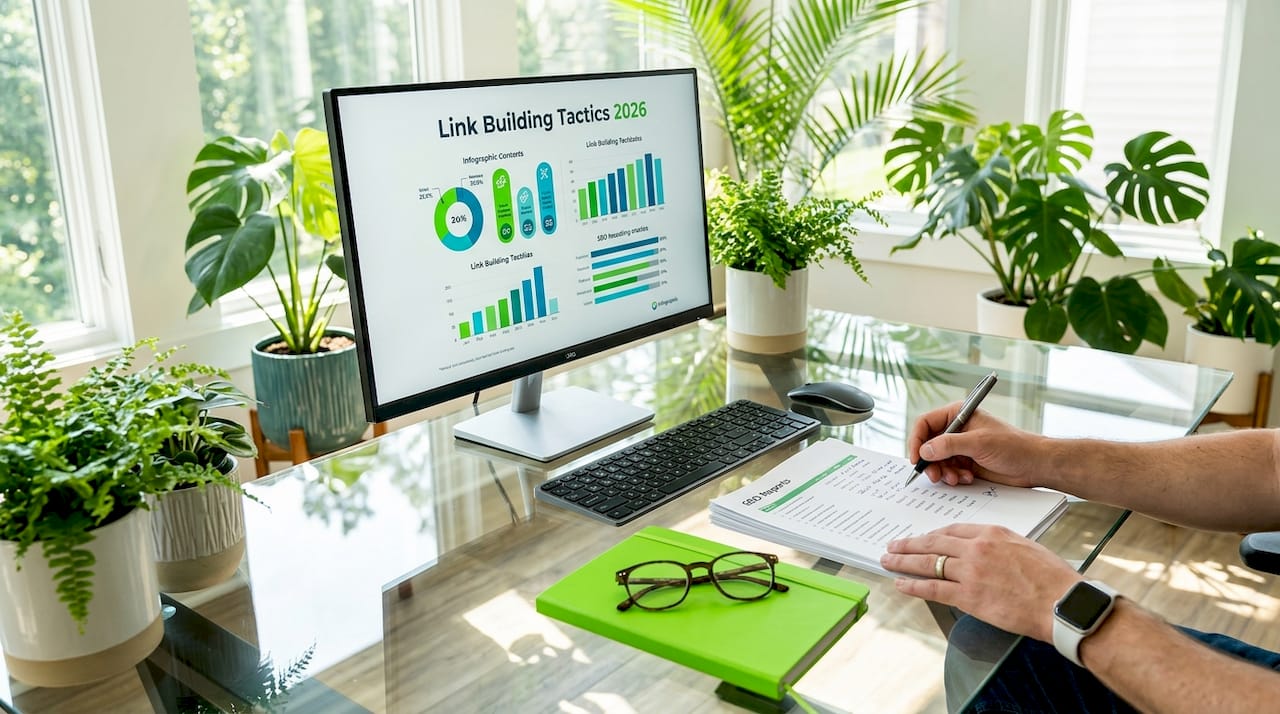
The tactics below represent the highest-performing link acquisition methods available to SEO professionals right now. Each one is repeatable, scalable, and grounded in editorial value rather than manipulation.
A well-executed data study in a digital PR campaign can earn 50 to 200 links from quality publications that would otherwise ignore a standard blog post. The compounding effect is significant: a single study published in January can still attract citations in December. The execution model is straightforward. Commission or conduct original research on a topic your audience cares about, package it as a press release or interactive report, and pitch it to journalists covering that beat. Tools like BuzzSumo and Muck Rack help you identify the right reporters.
Approximately 6% of external web links point to dead pages, which creates a natural, low-friction reason to reach out to site owners. You find a broken link on a relevant page, create or identify a replacement resource on your site, and pitch the swap as a favor. Ahrefs Site Explorer and Check My Links (a Chrome extension) make prospecting fast. The outreach angle is collaborative rather than promotional, which improves response rates considerably.
HARO (Help a Reporter Out), now operating under the Connectively platform, connects journalists with expert sources. HARO placements yield 5 to 15% success rates, and speed is the primary differentiator. Journalists often close queries within hours of posting. A fast workflow, a clear expert credential, and a concise, quotable response are the three requirements. Set up keyword alerts in HARO and respond within 60 minutes of a relevant query going live.
Pro Tip: Write your HARO responses in a three-part structure: your credential in one sentence, your direct answer in two to three sentences, and one supporting data point. Journalists need quotes they can drop straight into copy.
Resource pages are curated lists of links on a specific topic, maintained by universities, nonprofits, and industry blogs. They exist specifically to link out, which makes them receptive targets. Use Google search operators like "intitle:resources + your topicorinurl:links + your keyword` to find them. Your pitch should explain exactly why your content fits the existing list and what it adds that is not already there.
Guest posting remains a strong tactic when it targets publications with genuine audiences and editorial standards. The key shift in 2026 is aligning your guest post pitches with influencers or thought leaders already cited by the target publication. Mentioning or co-authoring with someone the editor already trusts increases acceptance rates. Platforms like Semrush’s Link Building Tool and Pitchbox help manage outreach at scale without losing personalization.
The skyscraper technique, popularized by Brian Dean at Backlinko, involves finding a top-ranking piece of content, creating a materially better version, and reaching out to sites linking to the original. The 2026 update to this method is adding a format advantage: if the original is a text article, your version should include original data, an interactive element, or a downloadable template. Content that offers a format upgrade earns links faster than content that is simply longer.
Building a free tool, calculator, or template generates backlinks passively over time. A cannabis compliance checklist, a keyword density analyzer, or a local SEO audit tool each attracts links from bloggers, journalists, and educators who reference it without any outreach required. The upfront investment is higher, but the long-term link velocity justifies it. Successful link building follows a two-stage funnel: build multiple linkable assets first, then run matched outreach for compounding results.
Search for listicles in your niche, such as “best cannabis SEO tools” or “top dispensary marketing agencies,” and identify which ones do not include your brand. Reach out to the author with a brief, evidence-backed case for why your brand belongs on the list. This tactic works because the content already exists and the author has already demonstrated willingness to link. Your pitch is a refinement, not a cold ask.
Relationships produce approximately 80% of links, which means the quality of your network directly determines the ceiling of your link acquisition. One-off outreach campaigns produce diminishing returns. Relationship-driven outreach compounds over time.
Here is a practical framework for building and activating those relationships:
Pro Tip: Build a “warm list” of 20 to 30 editors and journalists in your niche. Interact with them consistently over 60 days before pitching. Your acceptance rate on that list will outperform cold outreach by a wide margin.
Practitioners who pre-qualify prospects by matching topic relevance at domain, page, and paragraph levels consistently report higher placement rates than those who rely on domain authority alone. Relevance is the filter that separates useful links from noise. For cannabis businesses specifically, this means targeting publications covering wellness, retail, agriculture, and local business rather than generic marketing blogs. You can explore cannabis-specific link building to see how this targeting works in a regulated niche.
Choosing the right mix of tactics depends on your budget, timeline, and acceptable risk level. The table below gives you a direct comparison across the most common methods.
| Tactic | Avg. Cost per Link | Typical Timeline | Link Quality (DR) | Risk Level |
|---|---|---|---|---|
| Digital PR / data study | $500–$2,000 (production) | 4–8 weeks | DR 50–90+ | Low |
| Broken link building | $50–$150 (outreach) | 2–4 weeks | DR 30–70 | Low |
| HARO / journalist matching | Near zero | 1–3 weeks | DR 40–90+ | Low |
| Resource page outreach | $50–$100 (outreach) | 2–6 weeks | DR 30–60 | Low |
| Guest posting | $100–$500 | 3–6 weeks | DR 30–70 | Medium |
| Niche edits / link insertions | $100–$400 | 1–3 weeks | DR 30–60 | Medium |
Digital PR, resource page, and broken link outreach are the most repeatable and predictable methods for acquiring editorial links in 2026. That predictability matters when you are managing a link building checklist across multiple clients or campaigns. HARO stands out as the highest ROI tactic when you have credible experts available to respond quickly.
Managing link acquisition as a portfolio avoids over-concentration in any single method, which keeps your backlink profile natural and sustainable. A profile built entirely from guest posts looks manufactured. A profile mixing HARO citations, broken link replacements, digital PR mentions, and resource page links looks earned.
Google flags and penalizes the following tactics as link schemes. Using them risks manual actions and ranking drops that can take months to recover from.
Google’s link attribute guidelines require rel="sponsored" for paid or affiliate links, rel="ugc" for user-generated content links, and rel="nofollow" for links you do not want to formally endorse. Applying these correctly protects your site from compliance issues and signals transparency to Google’s crawlers. Proper attribution is not optional. It is the baseline for ethical link building in 2026. For cannabis businesses operating in a heavily regulated space, compliance in link building mirrors compliance in every other part of your marketing. The role of backlinks in cannabis SEO is significant, but only when those backlinks are acquired cleanly.
The most effective link building tactics list combines asset-backed outreach, relationship-driven prospecting, and a diversified acquisition portfolio to produce sustainable, high-quality backlinks.
| Point | Details |
|---|---|
| Assets drive conversion rates | Outreach with strong linkable assets achieves 8 to 18% conversion versus sub-1% without them. |
| Relationships produce most links | Approximately 80% of links come from ongoing relationships, not one-off cold outreach. |
| HARO is the highest-ROI tactic | Speed and response quality determine placement rates of 5 to 15% on journalist queries. |
| Avoid link schemes entirely | PBNs, paid links, and automated tools risk manual penalties and long-term ranking damage. |
| Diversify your link profile | Mixing digital PR, broken links, HARO, and resource pages keeps your profile natural and penalty-resistant. |
I have worked with enough SEO campaigns to say this directly: the majority of link building checklists circulating online are lists of tactics without a theory of why those tactics work. They tell you to do broken link building or guest posting, but they do not explain the underlying mechanism. The mechanism is simple. Google rewards links that exist because someone found your content genuinely useful. Every tactic on this list works when it produces that outcome and fails when it does not.
The shift I have seen in the past two years is that editorial links through valuable assets are pulling further ahead of placement-based tactics. A data study that earns 80 links from real journalists outperforms 200 guest posts on marginal sites, both in ranking impact and in brand credibility. The SEO community has been slow to fully internalize this because asset creation requires more upfront work than outreach templates.
My honest advice: build three to five genuinely useful assets before running any outreach campaign. A free tool, an original data study, a definitive guide, a comparison table, and a template library. Then run your outreach against all five simultaneously. The conversion rates you see will make the asset investment obvious in retrospect. Over-reliance on any single tactic, whether HARO or guest posting or digital PR, creates fragility. The professionals I respect most treat link acquisition the way a portfolio manager treats investments: diversified, monitored, and adjusted based on performance data rather than habit.
— Max
Cannabis businesses face a unique challenge: most generalist link building agencies do not understand the regulatory restrictions, platform limitations, and niche publication landscape that define this industry. Dopeseo specializes in exactly this space.
Dopeseo builds tailored link acquisition strategies for dispensaries, cultivators, and ancillary cannabis brands, using the same asset-backed, relationship-driven methods outlined in this article. From identifying compliant resource pages to executing digital PR campaigns with cannabis-specific data, the team delivers cannabis SEO strategies that produce measurable ranking improvements. If you are ready to build a backlink profile that holds up under scrutiny and drives real organic traffic, Dopeseo is the partner built for this industry.
A link building tactics list is a structured collection of strategies used to acquire backlinks from external websites, with the goal of improving search engine rankings and organic traffic. Effective lists prioritize editorial link acquisition through assets, outreach, and relationship building.
HARO and journalist matching offer the highest ROI because the cost is near zero and placement rates reach 5 to 15% when responses are fast and well-crafted. Digital PR with original data studies produces the highest volume of high-authority links per campaign.
Link quantity matters less than link quality and relevance. A single DR 80 editorial link from a relevant publication outperforms 50 links from low-quality directories. Focus on earning links from sites your audience actually reads.
Paid links are only safe when disclosed with rel="sponsored" per Google’s guidelines. Undisclosed paid links are treated as link spam and can trigger manual penalties. Transparency is the requirement, not avoidance of payment entirely.
Most link building tactics produce measurable ranking movement within four to twelve weeks, depending on the domain authority of the acquired links and the competitiveness of your target keywords. HARO and niche edits tend to show results faster than digital PR campaigns.

© 2026 Curious Monkeys Pressing Buttons LLC DBA Cannabiz Marketing Solutions AKA DopeSEO. All rights reserved.