
TL;DR:
- Organic search traffic is essential for cannabis businesses due to advertising restrictions, providing long-term, scalable visibility. Tracking these visitors with tools like Google Analytics and Search Console helps optimize content and improve rankings gradually. Building organic traffic requires patience, compliance, and strategic efforts to reach potential customers effectively.
Organic search traffic is defined as the visitors who reach your website by clicking unpaid, natural listings on search engine results pages, not ads. For cannabis businesses, this distinction matters more than in almost any other industry. Paid advertising on Google and Meta remains heavily restricted for cannabis brands, making organic search traffic one of the few reliable, scalable channels available. Tools like Google Analytics and Google Search Console let you measure this traffic precisely, track what is working, and build a long-term visibility strategy that does not disappear the moment a budget runs out.
Organic search traffic consists of visits from unpaid search engine results where users click natural listings, not ads. When someone types “dispensary near me” or “best CBD gummies” into Google, the results that appear below the paid ads are organic listings. Every click on those natural results counts as organic search traffic.

The process follows a clear funnel: Google crawls your site, indexes your pages, ranks them for relevant queries, serves them in results, and users click through. Low clicks despite impressions may indicate indexing or ranking issues, not just keyword problems. Diagnosing your organic traffic requires looking at the entire funnel, not just your keyword rankings.
For cannabis businesses, this channel is especially critical. Google restricts paid ads for most cannabis products, so organic visibility is often your primary path to new customers. A dispensary that ranks on page one for “recreational dispensary Denver” does not need to pay per click. That traffic compounds over time as your authority grows.
Google Analytics and Google Search Console are the two core tools for measuring organic search performance. They serve different purposes and work best together.
In Google Analytics (GA4), traffic is classified by source and medium. Organic search sessions appear under the medium “organic” with sources like “google” or “bing.” Misclassification can happen if UTM tags are incorrect or missing, which can make paid traffic appear as organic. Always verify your source/medium reports, especially when running any paid campaigns alongside your SEO efforts.
Google Search Console measures what happens before the click. Its four core metrics are:
Google Search Console clicks are the primary KPI for meaningful organic traffic. Impressions tell you about visibility, but clicks confirm actual visits and engagement.
Pro Tip: In GA4, always validate organic traffic at the session source/medium level. If you are running Google Ads alongside your SEO, missing UTM parameters can misattribute paid sessions as organic, inflating your numbers.
| Traffic Source | Medium in GA4 | Paid? | Stops Without Budget? |
|---|---|---|---|
| Organic Search | organic | No | No |
| Paid Search | cpc | Yes | Yes |
| Direct | (none) | No | No |
| Referral | referral | No | No |
| Social | social | No | No |
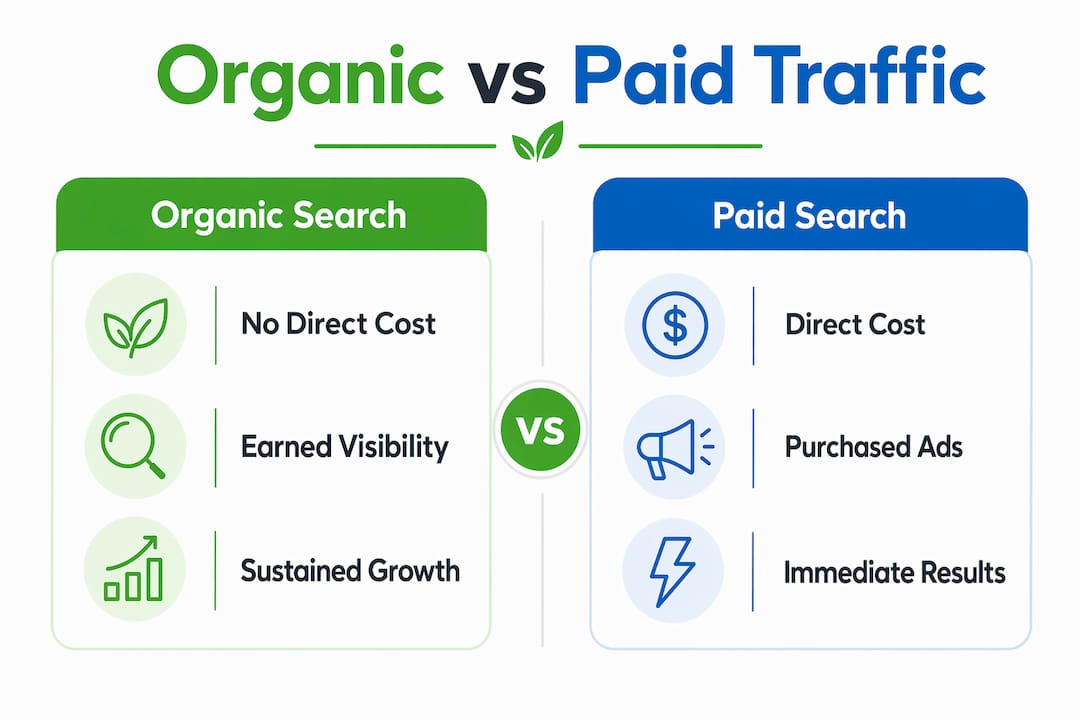
Organic search delivers earned visibility while paid search is purchased. Organic builds gradually but persists. Paid is immediate but stops the moment your budget does. For cannabis brands, this difference is not just strategic. It is often the difference between having a marketing channel at all.
Paid search traffic on Google is largely unavailable to cannabis businesses selling THC products. Google’s advertising policies prohibit most cannabis ads, which means you cannot simply buy your way to the top of the results page. Organic SEO is not a backup plan. It is the primary channel.
Beyond availability, organic and paid traffic behave differently. The number one organic result captures about 28% of all clicks, significantly outperforming paid ads in click share. Organic searchers also tend to have stronger intent. Someone who finds your dispensary through a natural search result has usually done more research and is closer to making a purchase.
Pro Tip: If you can run paid campaigns on compliant platforms like programmatic cannabis ad networks, combine them with your organic SEO strategy. Paid drives immediate traffic while organic builds your long-term foundation.
| Factor | Organic Search | Paid Search |
|---|---|---|
| Cost per visit | No direct cost per click | Direct cost per click |
| Speed to results | Months to build | Immediate |
| Longevity | Persists after effort | Stops with budget |
| Cannabis availability | Fully available | Heavily restricted |
| User trust | Higher | Lower |
| Long-term ROI | Compounds over time | Flat per dollar spent |
Organic search traffic offers cannabis businesses a set of advantages that paid channels simply cannot match, especially given industry restrictions.
Key benefits include:
The challenges are real, though. Cannabis businesses face regulatory restrictions that limit what you can say in your content. Google’s quality guidelines require compliant, accurate information, which means you cannot make unsubstantiated health claims. Competition in major markets like California, Colorado, and Illinois is intense. And organic rankings take time. Most new pages take three to six months to gain meaningful traction.
Google advises optimizing content to fulfill user needs, not just to chase clicks. For cannabis marketers, this means creating genuinely helpful content that answers real customer questions, from dosing guides to strain comparisons to local compliance information. That approach builds authority and earns rankings that last. You can explore more about this in Dopeseo’s guide on cannabis organic traffic.
Growing your organic traffic requires a structured approach. Here are the core steps that work specifically for cannabis businesses:
Conduct cannabis-specific keyword research. Use tools like Google Search Console, Ahrefs, or Semrush to find queries your customers actually type. Focus on local intent keywords like “dispensary near [city]” and informational queries like “how much CBD should I take.” Avoid overly broad terms where you cannot realistically compete.
Optimize on-page SEO elements. Every page needs a clear title tag, a compelling meta description, and headers that reflect the page’s topic. Your dispensary menu pages, strain pages, and blog posts all need individual optimization. Generic titles like “Products” do not rank.
Create compliant, high-quality content. Write content that answers real questions without making prohibited health claims. A blog post titled “What to Expect at a Dispensary for the First Time” serves genuine user intent and avoids compliance issues. Optimizing cannabis content for search requires balancing regulatory compliance with genuine helpfulness.
Build your local SEO presence. Most dispensary customers search locally. Claim and fully optimize your Google Business Profile. Consistent NAP (name, address, phone) information across directories matters. Local citations from cannabis-specific directories like Weedmaps and Leafly reinforce your geographic relevance. Dopeseo’s local search strategy guide covers this in detail.
Monitor Google Search Console weekly. Check which queries drive impressions but few clicks. Those pages likely need better title tags or meta descriptions. Track your average position for key terms and prioritize improving pages sitting in positions 5–15, where small gains produce large traffic increases.
Build quality backlinks. Links from cannabis publications, local news outlets, and industry directories signal authority to Google. A single link from a credible cannabis media site can move rankings more than dozens of low-quality directory submissions.
Pro Tip: Revisit and update your top-performing content every six months. Cannabis regulations change, and outdated information can hurt your rankings. Google rewards freshness, especially for topics where accuracy matters.
Several misunderstandings lead cannabis marketers to make poor decisions about their SEO investments. Here are the ones that cause the most damage:
Organic search traffic is the most sustainable and accessible customer acquisition channel for cannabis businesses, requiring consistent SEO investment rather than ad spend to build compounding, long-term visibility.
| Point | Details |
|---|---|
| Definition of organic traffic | Organic traffic is unpaid visits from natural search engine listings, distinct from paid or referral sources. |
| Measurement tools | Use Google Analytics for session data and Google Search Console for clicks, impressions, CTR, and position. |
| Organic vs paid for cannabis | Paid search is largely unavailable for cannabis brands, making organic SEO the primary acquisition channel. |
| Core growth strategies | Keyword research, on-page optimization, compliant content, local SEO, and regular Search Console audits drive results. |
| Avoid common traps | Organic traffic is not free, rankings do not equal traffic, and results take months, not weeks, to materialize. |
The cannabis industry has a way of exposing every weakness in a generic SEO strategy. I have watched dispensaries pour money into broad keyword rankings, celebrate hitting page one, and then wonder why their revenue did not move. The problem was always the same: they optimized for visibility without thinking about intent.
The businesses that grow their organic traffic consistently share one habit. They treat their content like a customer service tool, not a ranking mechanism. A strain guide that actually explains effects, dosing, and who it is right for does more for organic growth than ten keyword-stuffed product pages. Google’s algorithms have gotten good at recognizing the difference, and so have your customers.
The other thing I keep coming back to is data validation. Cannabis marketers running any kind of paid campaign alongside their SEO work need to be meticulous about UTM tagging. I have seen GA4 reports that looked like organic traffic was surging, only to find that a paid campaign with missing parameters was inflating the numbers. Your decisions are only as good as your data.
Patience is not a soft skill in this industry. It is a competitive advantage. Most cannabis brands abandon their SEO strategy before it has time to compound. The ones that stay consistent for twelve to eighteen months end up owning their local market in ways that no ad budget can replicate.
— Max
Organic search is the growth channel cannabis businesses cannot afford to ignore, and it is also the one most likely to be mishandled without industry-specific expertise. Dopeseo specializes in SEO for cannabis dispensaries, cultivators, and ancillary brands, building strategies that work within regulatory constraints while driving real, measurable traffic.
From cannabis-compliant content creation to Google Business Profile optimization and technical SEO audits, Dopeseo’s services are built specifically for this industry. Start with the Cannabis SEO Do’s and Don’ts guide to understand what works and what puts your rankings at risk. If you are ready to build a full strategy, the cannabis SEO 2026 guide covers everything from keyword research to local search optimization tailored to your market.
Organic search traffic is visits to your website from unpaid, natural search engine listings on platforms like Google and Bing. It excludes paid ads, direct visits, and referral traffic from other websites.
Cannabis brands face heavy restrictions on paid advertising, making organic search one of the only scalable digital acquisition channels available. Organic traffic also compounds over time, delivering long-term value without ongoing ad spend.
Use Google Analytics to track organic sessions by source/medium and Google Search Console to monitor clicks, impressions, CTR, and average position. Always validate your GA4 data if you are running any paid campaigns alongside your SEO work.
Organic traffic comes from unpaid rankings earned through SEO. Paid traffic comes from ads and stops immediately when your budget runs out. For cannabis businesses, paid search on Google is largely unavailable, making organic SEO the primary channel.
Most cannabis businesses see meaningful organic traffic growth within four to six months of consistent SEO effort. Competitive local markets may take longer, but rankings built through quality content and proper optimization tend to hold and grow over time.

© 2026 Curious Monkeys Pressing Buttons LLC DBA Cannabiz Marketing Solutions AKA DopeSEO. All rights reserved.