
TL;DR:
- Getting your ecommerce business legally established with an LLC and EIN before sales protects your personal assets and simplifies taxes.
- Choosing the right platform like Shopify, WooCommerce, or BigCommerce impacts SEO, ease of use, and scalability, influencing your store’s success.
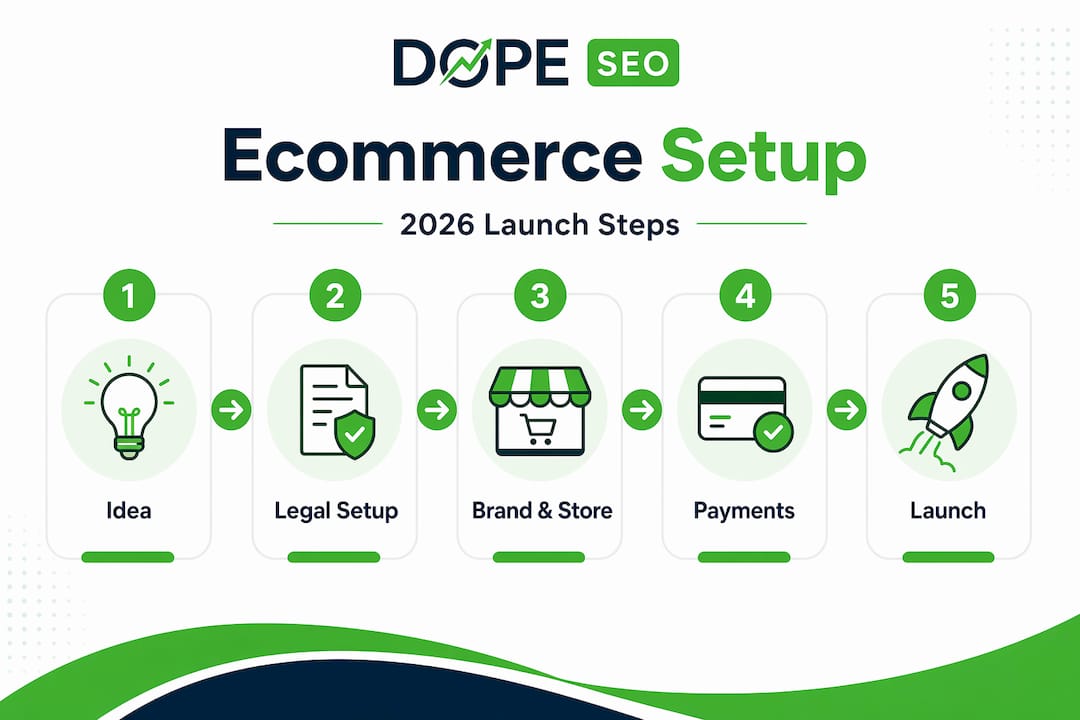
Getting your ecommerce setup step by step right from the beginning separates stores that gain traction from ones that burn cash and stall. Most entrepreneurs underestimate the complexity: platform choices, legal structures, payment gateways, shipping logistics, and marketing all compete for your attention at once. A realistic launch timeline runs 6 to 12 weeks with a starting budget of $500 to $2,000. This guide cuts through the noise and gives you a clear, sequenced roadmap so you spend your time building, not second-guessing.
| Point | Details |
|---|---|
| Start with legal foundations | Form an LLC and obtain an EIN before taking your first sale to protect personal assets. |
| Choose your platform wisely | Your platform choice affects SEO and conversions; switching later is costly and disruptive. |
| Price using landed costs | Calculate shipping, duties, and packaging per SKU before setting any retail price. |
| Aim for 1.5% conversion | Use this benchmark to evaluate whether your paid campaigns are working after launch. |
| Launch lean, then scale | Start with a focused product catalog and proven fulfillment before expanding SKUs or channels. |
Before you register a domain or pick a platform, you need a viable business idea and a legal structure that can support growth. Skipping this phase is the most expensive mistake new ecommerce owners make.
Start by identifying a niche with real demand and manageable competition. Use Google Trends, keyword research tools, and social media communities to verify that people are actively searching for your product. Look at competitor reviews on marketplaces to find recurring complaints. Those complaints are your product differentiation opportunities.
Validate your concept before you invest in inventory. Run a simple pre-sale landing page, test a small paid ad campaign, or survey your network. Getting even ten people to say “I would pay for that” with specifics beats months of guessing.
This is the step most entrepreneurs push off, and it costs them later. Choosing an LLC structure from day one protects your personal assets if a customer dispute or debt arises. It also makes tax management cleaner, especially once you start hitting sales tax nexus thresholds in multiple states.
Here is the core legal checklist:
Pro Tip: Open your business bank account before you spend a single dollar on inventory or tools. Commingling funds makes bookkeeping painful and creates problems during tax season.
Budgeting realistically matters here too. Plan for platform fees, domain and hosting, initial inventory or samples, logo and branding, and at least one month of paid ads. Spreading that $500 to $2,000 budget deliberately across these categories prevents surprises at launch.
The platform you choose shapes everything from how your store ranks in search results to how easily you can add products, manage orders, and scale. Choosing the right platform upfront has a direct impact on SEO performance and conversion rates. Migrating to a different platform six months in is disruptive and expensive.
| Platform | Best for | Monthly cost (entry) | SEO flexibility | Ease of use |
|---|---|---|---|---|
| Shopify | Beginners, fast setup | $29/month (annual) | Good, with apps | Very high |
| WooCommerce | WordPress users, custom builds | Free (hosting extra) | Excellent | Moderate |
| BigCommerce | Growing stores, B2B | $39/month | Very good native | Moderate |
Shopify is the go-to recommendation for most beginners because the setup is fast and the ecosystem of apps covers virtually every gap. WooCommerce gives you more control and better native SEO flexibility but requires more technical comfort. BigCommerce works well if you anticipate higher order volumes quickly.
In 2026, shoppers prioritize brand authenticity over product listings alone. They want to know who is behind the store, what values the business holds, and why they should trust you over the dozens of alternatives one Google search away. Your About page, founder story, and mission statement are not nice-to-haves. They are conversion tools.

On the design side, build mobile-first. Over 70% of online shopping browsing happens on phones. Choose a theme that loads in under three seconds, uses high-quality product photography, and places your call-to-action above the fold on product pages.
For SEO, proper URL structure and canonical tags need to be configured from day one. A clean URL like "/products/organic-body-lotionoutperforms/p=123?cat=5` in every meaningful way. Get this right at launch, not after you have 200 indexed pages to correct.
Pro Tip: Write product descriptions as if you are answering a skeptical customer’s top three questions. Cover what it does, who it is for, and why it is better than the alternative. This format improves both conversions and organic rankings.
If you are in a regulated industry like cannabis or hemp, compliant website design requires additional attention to age gates, disclaimers, and content restrictions that standard ecommerce templates do not address by default.
Getting the operational back end right determines whether your store can actually deliver on its promises. This is where many new stores leak revenue without realizing it.
Set up Stripe or PayPal as your primary gateway. Both integrate natively with major platforms and offer fraud protection, recurring billing, and multi-currency support. Configure your tax settings to collect sales tax in states where you have nexus (a physical presence or revenue threshold). Most platforms automate this with a tax app, but you still need to confirm the rules for your specific state registrations.
Key operational steps to complete before going live:
For most beginners, starting with in-house fulfillment makes sense. You control the packaging, shipping speed, and customer experience directly. Once you pass roughly 50 to 100 orders per month, evaluate a third-party logistics provider (3PL) that warehouses and ships on your behalf.
One critical pricing mistake is underestimating landed cost per SKU. Landed cost includes the product cost, inbound shipping to your warehouse, packaging materials, outbound shipping, and any duties or tariffs. Many sellers price based on product cost alone, then discover their margins disappear at volume. Calculate landed cost for every product before you publish a price.
Supplier reliability is another overlooked variable. Suppliers who are slow to ship or inconsistent in quality generate returns, negative reviews, and customer service volume that can overwhelm a small team early on. Order samples from multiple suppliers before committing to one.
A great store with no traffic generates zero revenue. Your launch strategy needs to drive qualified visitors from day one while you build organic momentum over time.
Follow this sequenced launch approach:
Pro Tip: Track your customer acquisition cost (CAC) from every channel separately. If Instagram ads cost you $18 per customer and email costs $3, that data tells you exactly where to reinvest as you grow.
For cannabis and hemp ecommerce businesses specifically, organic SEO becomes even more critical because paid advertising restrictions limit your channel options. Dispensary sales tactics that work within platform guidelines can significantly offset what paid channels cannot reach.
I have seen the same pattern repeat itself enough times that I want to be direct about it. Most founders rush the business formation and legal steps because they feel administrative and boring. Then six months later they are dealing with a personal liability exposure, a tax mess, or a payment processor hold because their business entity is not properly documented. Legal protection and tax structuring are not optional. They are the foundation everything else sits on.
The second biggest mistake I see is treating supplier selection like a commodity decision. Founders pick the cheapest option, skip ordering samples, and launch. Then the first batch of real orders gets delayed, arrives damaged, or is the wrong size. Early reputation damage from fulfillment failures is incredibly hard to reverse because negative reviews compound fast and positive ones take time.
What I have found actually works is starting simple on purpose. A focused catalog of five to ten products on a scalable platform with clean branding outperforms a massive product dump on a cheap builder every time. You learn faster, troubleshoot more specifically, and build customer relationships that generate repeat revenue.
Data beats gut feelings in marketing. I have watched business owners double down on their instincts about which channel would work, ignore the analytics showing otherwise, and waste months of budget as a result. Set your benchmarks early, review them weekly, and let the numbers guide your spend.
— Max
Setting up your store correctly is only half the equation. Getting found by the right customers requires an SEO and digital marketing foundation that holds up in competitive markets. Dopeseo specializes in exactly this, helping ecommerce businesses cut through noisy search results with strategies built for regulated and competitive industries.
Whether you need help with your 2026 SEO strategy to increase organic traffic, or you want a complete content and local search plan, Dopeseo brings the technical depth and industry experience to make it happen. For businesses in the cannabis and hemp space, where paid advertising is restricted and organic visibility is everything, Dopeseo’s cannabis SEO guide covers exactly how to build that presence sustainably. Explore the resources and reach out to discuss what your store needs at launch and beyond.
A realistic ecommerce setup step by step runs between 6 and 12 weeks with consistent effort, covering business formation, platform setup, product loading, and pre-launch marketing.
Shopify is the most beginner-friendly option, starting at $29 per month on an annual plan, with built-in payment processing and a large app ecosystem for scaling.
You are not legally required to form an LLC to sell online, but it is strongly recommended because it protects your personal assets from business liability and simplifies tax management from the start.
Early-stage ecommerce stores should target a minimum conversion rate of 1.5% after launching paid acquisition campaigns, using that benchmark to evaluate whether your product pages and targeting are working.
Calculate the full landed cost per product SKU, including shipping, packaging, duties, and tariffs, before setting any retail price. Many sellers lose margin by pricing against product cost alone.

© 2026 Curious Monkeys Pressing Buttons LLC DBA Cannabiz Marketing Solutions AKA DopeSEO. All rights reserved.