
Standing out as a cannabis cultivator in North America takes more than quality flower or premium genetics. With strict industry regulations and advertising restrictions, growing your local presence online is often your best path to attracting new dispensary partners. Local SEO for cannabis businesses helps you get found by nearby buyers who are searching for reliable, compliant suppliers they can actually trust. This article lays out practical ways to make your cultivation operation visible in targeted local searches, even within a tightly regulated environment.
| Point | Details |
|---|---|
| Local SEO Focus | Local SEO targets nearby dispensaries and buyers, optimizing for localized searches specific to cannabis cultivators. |
| Core Optimization Pillars | Essential strategies include enhancing online visibility, establishing geographic authority, and building trust signals through accurate listings. |
| Compliance Considerations | Navigating strict regulations is crucial; cultivators should focus on organic visibility rather than paid ads, ensuring all marketing content aligns with legal standards. |
| Consistent Business Information | Maintaining accurate Name, Address, Phone (NAP) consistency across all platforms is vital for building trust and improving local search rankings. |
Local SEO for cannabis cultivators differs significantly from traditional search engine optimization because it addresses a specialized industry operating under distinct regulatory constraints. Local SEO for cannabis businesses focuses on making your cultivation operation visible to nearby dispensaries, retailers, and regional wholesale buyers who actively search for reliable growers in their area. Unlike general SEO that targets broad national audiences, local SEO hones in on geographic-specific searches like “cannabis cultivators near me” or “licensed growers in [state/region].” This targeted approach is critical because your primary customers—dispensaries looking to stock quality flower and products—search locally for trustworthy suppliers they can visit, inspect, and build relationships with.
The foundation of local SEO for cultivators rests on three core pillars. First, you optimize your online visibility to appear in local search results when dispensary owners or procurement managers search for cultivators in your region. Second, you establish geographic authority by proving your legitimacy, compliance record, and reputation within specific markets through strategic content, business listings, and verified information. Third, you build local trust signals that demonstrate reliability to potential business partners before they ever pick up the phone. What makes cannabis SEO fundamentally different from mainstream marketing is the regulatory environment—you cannot run paid ads on Google or Facebook, you face strict platform limitations, and you must carefully navigate compliance while still reaching your target audience through organic search and strategic local optimization.
For cultivators specifically, local SEO means optimizing around keywords that dispensary buyers actually use when searching for suppliers. They’re hunting for terms like “wholesale cannabis growers [region],” “small batch cultivators,” “organic flower suppliers,” or “craft cannabis producers near [city].” They’re also searching for proof of compliance, certifications, and quality metrics. When you implement proper local SEO strategies, your website and business profiles appear prominently in these searches, positioning you ahead of competitors who neglect this critical channel. The beauty of local SEO is that it levels the playing field—a smaller craft cultivator with a well-optimized digital presence can outrank a larger operation that ignores search optimization.
Pro tip: Start by identifying the 5-10 dispensaries nearest to your cultivation facility and research which keywords they use when searching for suppliers, then optimize your website and local business listings around those exact terms.
Improving your local visibility as a cannabis cultivator requires a multi-layered approach that extends beyond just having a website. Your goal is to appear consistently across the platforms where dispensary buyers, procurement managers, and regional retailers actually search. The most effective strategy starts with claiming and optimizing your presence on business directories and maps services that your target customers use. Google Business Profile is the foundation, but you also need verified listings on industry-specific directories, local business databases, and regional agricultural or wholesale platforms. When potential buyers search for cultivators in your area, you want your name, accurate contact information, detailed product descriptions, and customer reviews appearing across multiple touchpoints. This consistent presence builds geographic authority—the signal that search engines use to determine whether you’re a legitimate, established operation worth recommending to local searchers.
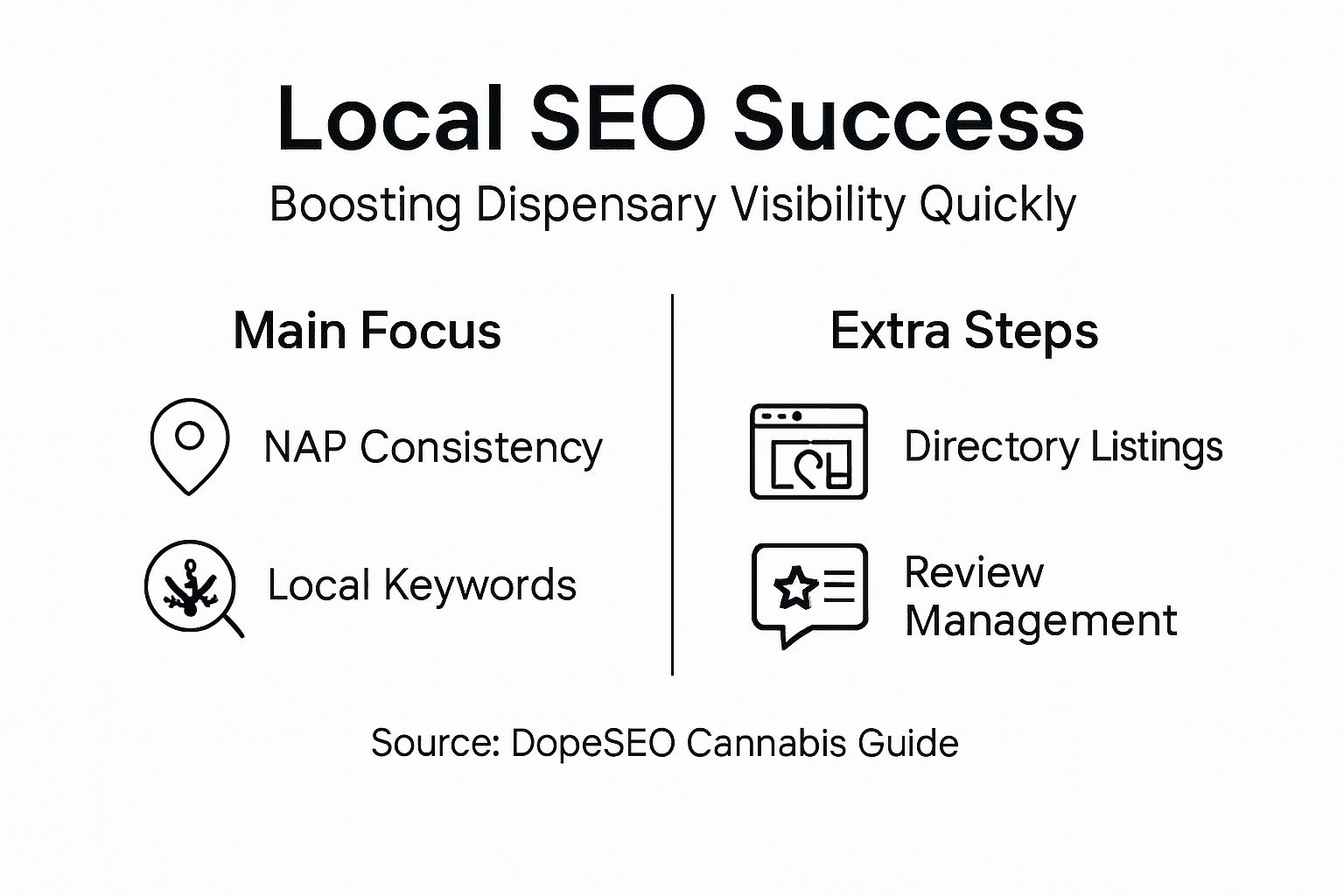
One critical tactic many cultivators overlook is maintaining Name, Address, Phone (NAP) consistency across every platform where you appear online. If your dispensary partners find conflicting information about your business—different phone numbers, spelling variations in your name, or inconsistent addresses—search engines interpret this as unreliability. Maintaining accurate NAP information across all directories directly impacts your local search rankings. Beyond basic information accuracy, you need to actively build local backlinks by partnering with industry organizations, cannabis associations, and agricultural networks that link to your website. You should also pursue customer reviews strategically. Positive reviews from dispensary owners and other B2B customers carry significant weight in local search algorithms. The more recent, verified reviews you accumulate, the higher your local visibility climbs. Create a simple process where satisfied business partners leave reviews on your Google Business Profile and industry directories—this social proof becomes one of your most powerful local SEO assets.
Local keyword optimization is another strategic layer many cultivators miss. Rather than targeting generic terms like “cannabis cultivator,” focus on hyper-local variations: “craft cannabis grower in [county],” “licensed cultivator near [city],” “wholesale flower supplier [region],” or “small batch cannabis producer [state].” These long-tail, location-specific keywords face less competition and connect you directly with buyers searching in your geographic market. Create website content addressing these local keywords—blog posts about growing conditions specific to your region, pages highlighting your compliance certifications for your state, and testimonials from dispensaries you supply. This localized content signals to search engines that you operate in and understand your specific market.
Pro tip: Audit your current online listings this week by searching your business name across Google Maps, Yelp, local directories, and industry sites—document any inconsistencies in your address, phone number, or business description, then update everything to match your official business information exactly.
Cannabis cultivation operates in a uniquely complex legal environment where what’s completely legal in one jurisdiction can be criminal in another. Unlike most industries where federal and state regulations align, cannabis cultivators face a patchwork of conflicting rules. Federal law still classifies cannabis as a Schedule I controlled substance, meaning your business technically operates in a gray area even in states where cultivation is legal. This fundamental legal contradiction creates significant challenges for your local SEO strategy. You cannot run Google Ads, Facebook advertising, or most paid digital marketing campaigns. You face strict content restrictions on how you describe your products, what health claims you can make, and how you can market your cultivation operation. These advertising bans and content limitations fundamentally shape what your SEO strategy can accomplish compared to traditional industries.
The regulatory landscape varies dramatically by location. Some states require cultivators to operate only within specific geographic boundaries and prohibit direct relationships with dispensaries in other regions. Some jurisdictions mandate that cultivation operations remain completely closed to public access, which means you cannot host facility tours or build community engagement the way other agricultural businesses do. Understanding how cannabis laws and regulations vary globally is essential because your local SEO approach must align with your specific state and local restrictions. What works for a California cultivator differs completely from what works in Massachusetts or Colorado. Before implementing any local SEO tactic, verify what’s legally permissible in your jurisdiction. Some states prohibit any marketing that suggests cannabis products treat or cure medical conditions. Others restrict how you can describe potency or effects. Many states require specific licensing language on all marketing materials. Your website content, Google Business Profile descriptions, and local directory listings must comply with these restrictions while still effectively communicating what you offer to dispensary partners.
The key is building a compliant SEO strategy that works within these constraints. Instead of relying on prohibited paid advertising, you focus entirely on organic search visibility through properly optimized listings, local citations, backlinks from compliant industry partners, and valuable content that addresses what dispensary buyers actually search for. You emphasize verifiable facts: your licenses and certifications, your compliance record, growing methods, strain genetics, yield metrics, and partnership testimonials. You avoid marketing language that implies health benefits, medicinal effects, or unsubstantiated claims. Your local SEO becomes more important precisely because you cannot advertise. When dispensaries search for reliable cultivators, your optimized presence in organic search results becomes your primary marketing channel. This restriction, while challenging, actually creates opportunity if you approach it strategically.
Pro tip: Before launching any local SEO content or claiming business listings, consult your state’s cannabis regulatory agency website and document all advertising and content restrictions specific to your jurisdiction, then build a compliance checklist your team references before publishing anything online.
Your Google Business Profile is essentially your digital storefront for dispensary buyers searching for cultivators in your area. This single listing appears on Google Maps, Google Search results, and across Google’s ecosystem, making it the most visible element of your local SEO presence. When a dispensary procurement manager searches “cannabis cultivators near me” or “licensed growers in [region],” Google prioritizes results based heavily on how well you’ve optimized your business profile. The profile acts as a trust signal. It shows your exact location, verified contact information, operating hours, licensing details, and customer reviews. But here’s where most cultivators stumble: they claim their profile and then abandon it, filling in only the bare minimum information. A profile with incomplete or outdated information signals to both search engines and potential business partners that you’re not actively managing your operation.
Optimizing your Google Business Profile requires attention to several critical components. Start with your business description. You have roughly 750 characters to explain who you are and what you offer, so use this space strategically. Instead of generic language like “cannabis cultivator,” write something like “Licensed cultivator specializing in small-batch, pesticide-free flower and wholesale distribution to dispensaries across region]. Compliant with [state] regulations. Established partnerships with 15+ dispensaries.” [Including comprehensive business information in your profile directly improves your visibility in local search results and Google Maps. Add photos of your operation (if regulations allow), your cultivation facility exteriors, packaged products, and your team. Upload videos if you have them. Add your business hours, website link, and phone number. Most importantly, verify your business address with Google by confirming their postcard or phone verification code. Without verification, your profile has limited credibility.
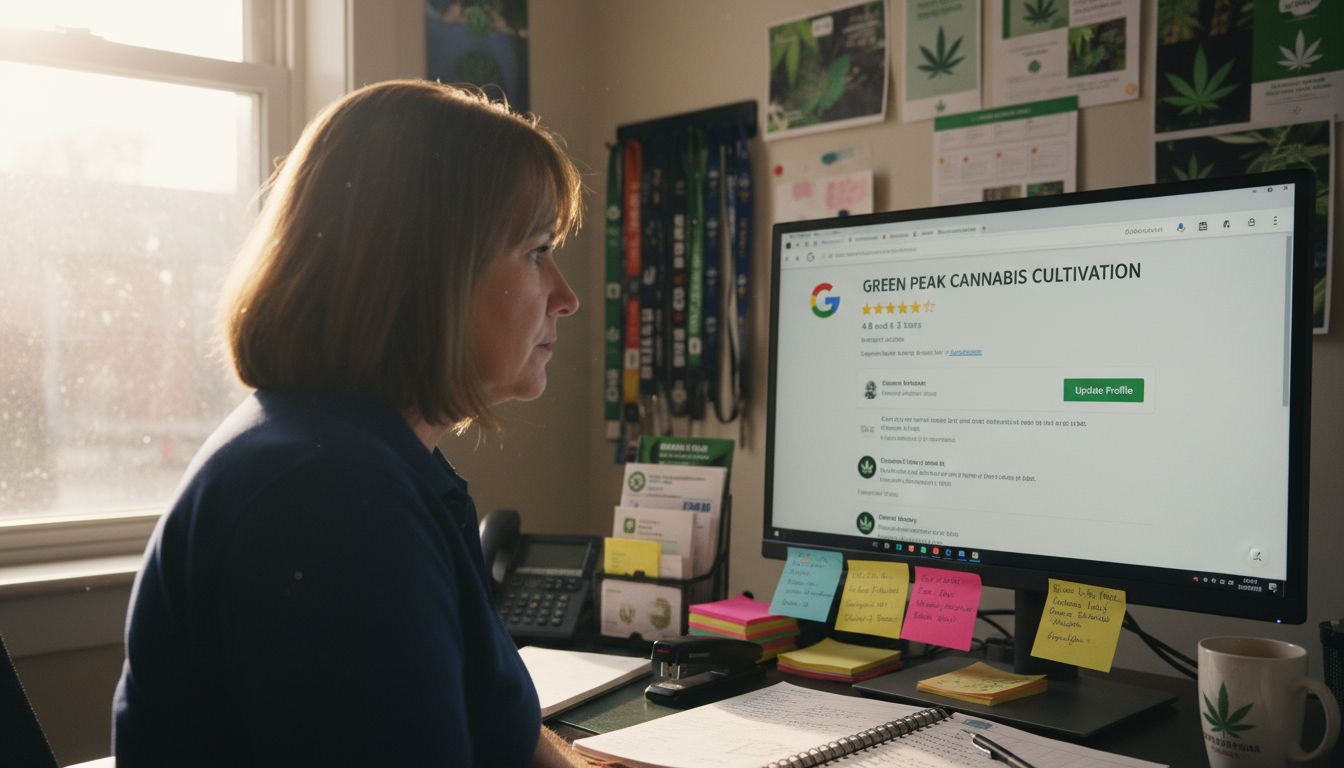
Beyond the basic profile setup, manage your listings on secondary platforms with the same rigor. Claim your business on local directories, industry-specific databases, and any platform where dispensary owners might search for suppliers. Each of these citations reinforces your geographic authority. Encourage satisfied dispensary partners to leave reviews on your Google Business Profile. Reviews from verified customers carry tremendous weight in local rankings. Respond to all reviews, both positive and negative, professionally and promptly. Negative reviews about service or product quality deserve thoughtful responses that show you take feedback seriously. Positive reviews deserve a simple thank you. This active engagement signals to Google that you’re a responsive business partner. Update your profile regularly with new photos, posts about seasonal offerings, announcements about new strains or growing methods, and any compliance certifications you’ve obtained. Treat your Google Business Profile like a living document that evolves with your business rather than a static directory listing.
Below is a summary of key local citation platforms for cannabis cultivators and their advantages:
| Platform Type | Example | Main Benefit |
|---|---|---|
| General directories | Google Business Profile | Largest search reach |
| Cannabis industry sites | Weedmaps, Leafly | Targeted audience access |
| Local business listings | Chamber of Commerce, Yelp | Builds geographic authority |
| Agricultural/wholesale networks | AgFunder Network, Produce Market | Attracts regional B2B buyers |
Pro tip: Set a monthly calendar reminder to audit your Google Business Profile and all secondary directory listings for accuracy, respond to any new reviews, post seasonal updates, and verify all contact information matches across platforms.
Most cannabis cultivators understand they need local SEO, but they stumble on execution by repeating the same mistakes. The first major pitfall is inconsistent business information across platforms. You might list your business address one way on your website, slightly differently on Google Business Profile, and with a completely different phone number format on industry directories. Search engines interpret these inconsistencies as red flags indicating either unreliability or multiple separate businesses. This confusion directly harms your local rankings. When dispensary buyers see conflicting information, they lose confidence in your professionalism. The solution is systematic: audit every platform where your business appears, document the exact address format, phone number, and business name your state uses officially, then standardize everything identically across every listing. This sounds tedious, but it’s the single highest impact activity you can do for local SEO.
Another critical mistake cultivators make is ignoring their local competition. You should regularly search the keywords your dispensary partners use when hunting for growers. Look at which cultivators rank above you. What are they doing right? Do they have more reviews? Better photos? More detailed descriptions of their growing methods? Understanding common local SEO pitfalls and learning from competitor strategies helps you avoid wasting effort on tactics that don’t move the needle in your market. Many cultivators also fail to localize their content meaningfully. You might have a generic website page about your cultivation operation, but it doesn’t mention your specific state’s regulations, your region’s climate advantages, or local dispensaries you supply. Search engines reward localized, specific content. Write content that directly addresses your geographic market. Create pages about how you comply with your state’s specific regulations. Highlight partnerships with regional dispensaries. Discuss growing conditions unique to your area. This hyperlocal approach dramatically improves your relevance in local search results.
A third pitfall that sabotages many cultivators is neglecting review management and reputation monitoring. You might have earned positive reviews from satisfied dispensary partners, but if you never respond to them or monitor new reviews, you signal that you don’t care about customer feedback. Worse, if negative reviews appear and go unanswered, potential customers form lasting negative impressions. Set up alerts so you know immediately when new reviews post. Respond to every review within 48 hours. Thank positive reviewers. Address legitimate complaints in negative reviews professionally and offer to make things right. This active engagement improves your local rankings and builds trust with potential business partners. Finally, many cultivators launch their local SEO efforts then abandon them after a few months. Local SEO is not a one-time project. Search algorithms change. Your competitors optimize their profiles. New review platforms emerge. Your business information needs regular updates. Outdated information, stale content, and abandoned profiles signal that you’re not actively engaged with your market.
Here’s a comparison of local SEO challenges and unique solutions for cannabis cultivators:
| Challenge | Why It Matters | Local SEO Solution |
|---|---|---|
| Regulatory restrictions | Prohibits paid ads; strict content rules | Focus on organic search, compliant content |
| Inconsistent business info | Hurts trust and local ranking | Maintain 100% NAP consistency |
| Limited ad platforms | No Google or Facebook ads allowed | Optimize directories and Google Business Profile |
| Market fragmentation | Laws differ by state/region | Use location-specific keywords and content |
| Trust building | Dispensaries need reliable partners | Solicit genuine B2B reviews; highlight compliance |
Pro tip: Create a spreadsheet listing every platform where your business appears (Google Business Profile, local directories, industry databases, review sites), document exactly how your information appears on each, then set a quarterly audit reminder to check for inconsistencies and outdated details.
Navigating the complex world of cannabis local SEO requires specialized knowledge and a trusted partner who understands the unique challenges of regulatory constraints, inconsistent business information, and the critical need for geographic authority. If you are a cultivator looking to boost your dispensary reach and appear prominently in local search results with verified compliance and optimized Google Business Profile listings you need a tailored strategy that delivers real results.
At DopeSEO, we specialize in helping cannabis businesses like yours grow organically through expert local search optimization, AI-driven SEO techniques, and reputation management designed specifically for this tightly regulated industry. Don’t let legal hurdles or unfinished profiles stop your cultivation business from rising above competitors seize this opportunity to maximize local visibility and establish yourself as the trusted supplier dispensaries actively seek. Visit us today at https://dopeseo.com and discover how our focused solutions can transform your online presence starting now.
Local SEO for cannabis cultivators focuses on optimizing online visibility to attract nearby dispensaries, retailers, and regional wholesale buyers specifically seeking reliable growers in their area. This approach hones in on geographic-specific searches rather than targeting broader national audiences.
Cannabis cultivators can improve online visibility by optimizing their Google Business Profile, maintaining consistent Name, Address, Phone (NAP) information across platforms, building local backlinks, and encouraging positive reviews from dispensary partners to establish credibility and trust.
Cannabis cultivators should target long-tail, location-specific keywords such as “wholesale cannabis growers,” “organic flower suppliers,” and “small batch cultivators” to connect directly with dispensaries searching for suppliers in their geographic market.
Legal restrictions can limit cannabis cultivators from using paid advertising and dictate specific content guidelines, making it essential for them to focus on organic search visibility through optimized listings, compliant content, and information that emphasizes verifiable compliance and product quality.

© 2026 Curious Monkeys Pressing Buttons LLC DBA Cannabiz Marketing Solutions AKA DopeSEO. All rights reserved.