
Many cannabis cultivators and dispensary owners believe paid advertising will drive their customer base, but platform restrictions make this nearly impossible. On-page SEO is critical for cannabis businesses to improve online visibility and attract organic traffic in 2026. Most cannabis consumers start their product search on Google, making organic search your primary customer acquisition channel. This guide delivers tailored on-page SEO strategies specifically designed for cannabis cultivation businesses and dispensaries, helping you capture high-intent traffic, comply with regulations, and convert visitors into loyal customers through strategic optimization techniques.
| Point | Details |
|---|---|
| On-page SEO overcomes ad restrictions | Cannabis businesses face severe advertising limitations, making organic search visibility essential for customer acquisition. |
| Keyword research drives targeted traffic | Identifying high-value, compliant keywords aligned with user intent improves engagement and conversion rates. |
| Local SEO requires cannabis-specific tactics | Dispensaries must balance visibility, compliance, and trust to capture nearby customers effectively. |
| Technical optimization builds search authority | Structured content, schema markup, and compliance checks enhance rankings and user trust. |
| Strategic content converts organic visitors | Matching content to search intent and optimizing site structure drives measurable business growth. |
On-page SEO for cannabis brands involves optimizing website content and structure to rank higher in search engine results pages. This includes optimizing title tags, meta descriptions, site structure, and keywords tailored specifically to cannabis cultivation contexts. Unlike general SEO, cannabis on-page optimization must navigate unique compliance requirements while competing for valuable organic visibility.
The cannabis industry faces advertising restrictions across major platforms like Google Ads, Facebook, and Instagram. This makes organic search your most reliable customer acquisition channel. With the cannabis industry projected to grow from USD 57.18 billion in 2023 to USD 444.34 billion by 2030, competition for organic visibility intensifies daily. Your cultivation business needs strategic on-page optimization to capture this expanding market.
Core on-page SEO elements for cannabis cultivation include:
Pro Tip: Prioritize compliance-friendly, clear meta titles and descriptions that build user trust while incorporating your target keywords naturally. Avoid language that could trigger platform restrictions or regulatory scrutiny.
Your cannabis cultivation website competes against established brands and local dispensaries for the same organic traffic. Effective on-page SEO gives you the foundation to rank for high-value search terms, attract qualified visitors, and convert them into customers without relying on restricted advertising channels.
Keyword research is crucial for cannabis SEO to identify what the audience is searching for. Analyzing search volume, competition, and audience intent helps target relevant keywords that drive qualified traffic to your cultivation website. Cannabis-specific keyword research requires understanding both industry terminology and consumer search behavior.
Follow this step-by-step process for effective cannabis keyword research:
Matching content to informational, navigational, or transactional intent improves search results and conversion rates. When you align your content with what users actually want at each stage of their journey, you satisfy both search engines and potential customers. Informational content answers questions about cultivation methods, strain benefits, or consumption techniques. Navigational content helps users find your location, hours, or contact information. Transactional content showcases products, pricing, and purchasing options.
Different intent types require different content approaches. Informational searchers need comprehensive guides, how-to articles, and educational resources that establish your expertise. Navigational searchers want clear location pages, contact forms, and business information. Transactional searchers expect detailed product descriptions, pricing transparency, and streamlined purchasing paths.
Pro Tip: Regularly update keyword research to keep pace with evolving cannabis trends and regulations. New strains, consumption methods, and legal changes create fresh keyword opportunities that early adopters can dominate before competition intensifies.
Master cannabis keyword research by combining industry knowledge with data-driven analysis. Track which keywords drive not just traffic, but actual conversions and revenue. Focus your optimization efforts on cannabis SEO keyword research that delivers measurable business results rather than vanity metrics.
Local SEO is fundamentally different for weed dispensaries due to the need to balance visibility, compliance, and trust. Nearly half of all Google searches have local intent, making local optimization critical for dispensaries serving nearby customers. Cannabis businesses face unique obstacles that require specialized local SEO approaches.
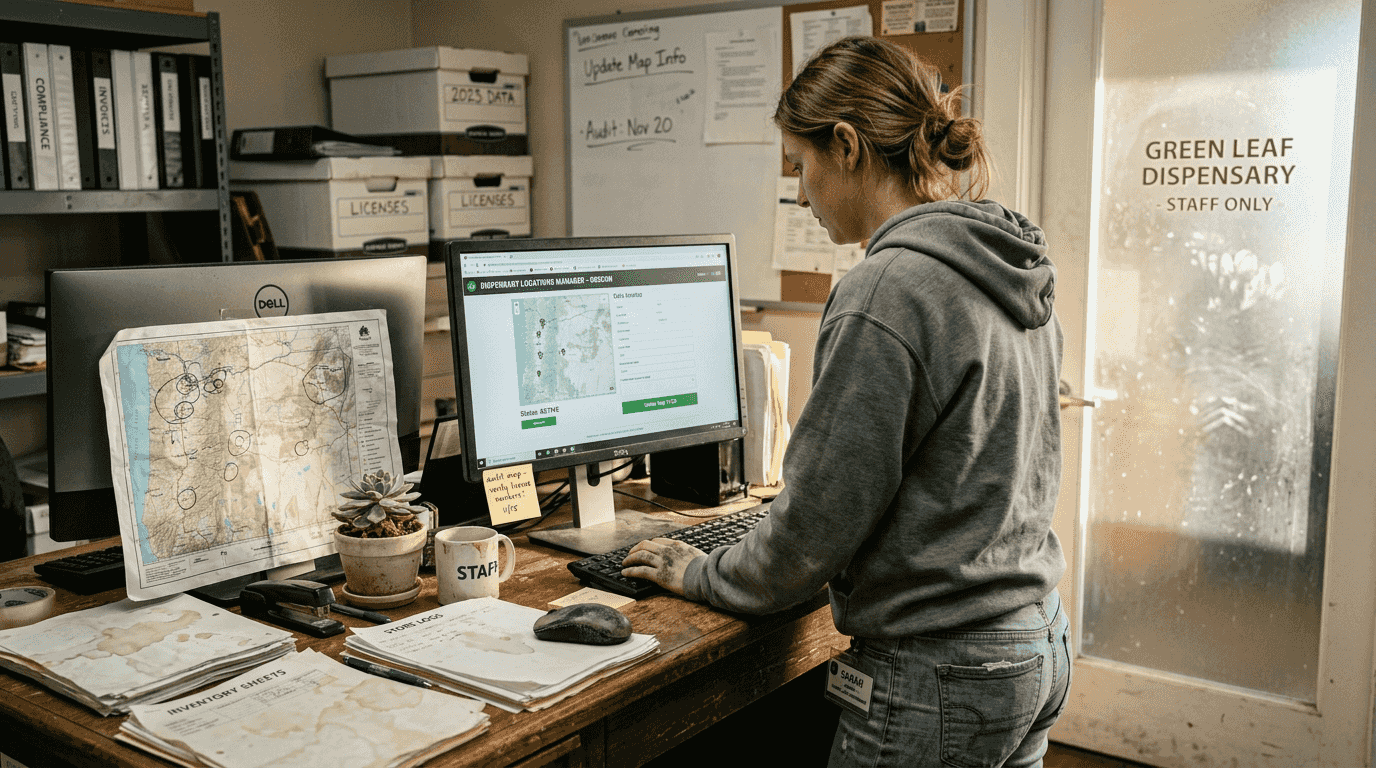
Key challenges include advertising platform restrictions that limit Google Ads and social media promotion, strict compliance requirements that vary by jurisdiction, and the need to build trust with cautious consumers navigating a regulated market. Traditional local SEO tactics require adaptation for cannabis contexts.
| Traditional Local SEO Tactic | Cannabis-Specific Adaptation |
|---|---|
| Google My Business optimization | Requires careful category selection and compliance with cannabis business policies |
| Citation building across directories | Focus on cannabis-specific directories and compliant general directories |
| Review generation campaigns | Must avoid incentivized reviews and maintain platform policy compliance |
| Local content creation | Incorporate geo-targeted keywords while respecting advertising restrictions |
| Local link building | Partner with compliant local businesses and industry organizations |
Effective strategies for dispensary local SEO include:
The conversion power of local searches makes this investment worthwhile. 80% of local searches lead to conversions for small businesses, and cannabis dispensaries see even higher conversion rates when they capture high-intent local traffic. Someone searching for “dispensary near me” or “cannabis delivery [city name]” is ready to make a purchase.
Local SEO cannabis dispensaries must prioritize consistency across all online listings. Your business name, address, and phone number should match exactly across your website, Google Business Profile, and directory listings. Inconsistent information confuses search engines and potential customers, harming your local rankings.
Understanding why local SEO matters helps you prioritize optimization efforts that deliver the highest return on investment for your dispensary’s specific market conditions.
Focus on foundational SEO best practices such as meta titles, content structure with H2 and H3 subheadings, and geo-targeting. Cannabis websites require meticulous technical optimization to satisfy search engine requirements while maintaining compliance with industry regulations. Your site architecture directly impacts both user experience and search visibility.
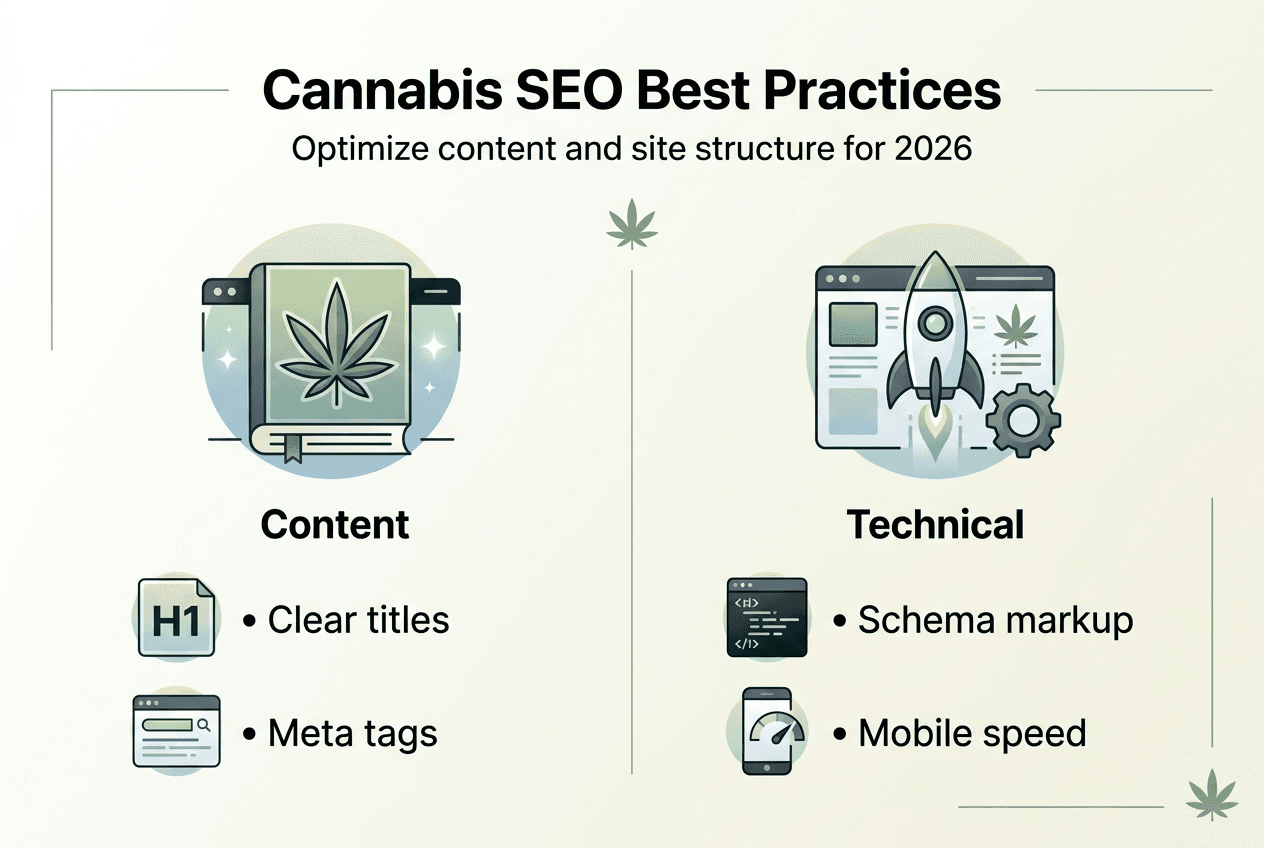
Structured content with clear header hierarchy improves readability and SEO performance. Search engines use your H2 and H3 subheadings to understand content organization and topic relevance. Users scan headers to quickly find information they need. Well-structured content keeps visitors engaged longer, reducing bounce rates and signaling quality to search algorithms.
Implement schema markup types including Review, Store/Local Business, WebPage, Website, and Organization to enhance visibility in search results. Schema markup provides search engines with explicit information about your business, products, and content, enabling rich snippets that increase click-through rates.
| Basic SEO Element | Enhanced Cannabis-Specific Practice |
|---|---|
| Meta title with keywords | Meta title with keywords, compliance language, and location modifiers |
| Standard meta description | Benefit-focused description that addresses user intent and builds trust |
| Generic header structure | Headers incorporating geo-targeting and strain-specific terminology |
| Basic image alt text | Descriptive alt text with product details and compliance considerations |
| Simple internal linking | Strategic internal linking that guides users through conversion funnel |
Crafting effective meta titles and descriptions requires balancing multiple priorities. Your meta title should incorporate your primary keyword, location if relevant, and a compelling benefit within 50-60 characters. Meta descriptions need to summarize your page value, include a call to action, and stay within 150-160 characters for optimal display in search results.
Key technical optimization tips include:
Pro Tip: Regular site audits help catch and fix technical SEO issues before they impact rankings. Use tools like Google Search Console, Screaming Frog, or SEMrush to identify crawl errors, broken links, duplicate content, and other technical problems quarterly.
The on-page SEO process 2026 emphasizes mobile-first indexing and Core Web Vitals as critical ranking factors. Your cannabis website must deliver fast, smooth experiences on mobile devices to compete effectively. Page speed, interactivity, and visual stability directly influence both rankings and conversion rates.
Mastering on-page SEO cannabis brands requires ongoing optimization as search algorithms evolve and industry regulations shift. Technical excellence provides the foundation for all other SEO efforts to succeed.
Professional SEO providers offer tailored strategies for cannabis market complexities that generic marketing agencies cannot match. Navigating advertising restrictions, compliance requirements, and intense local competition requires specialized expertise and industry-specific knowledge. Expert help can accelerate growth, improve compliance, and increase local and organic visibility faster than trial-and-error approaches.
Dope SEO specializes in cannabis SEO services including on-page optimization, local SEO, and content strategy designed specifically for cultivation businesses and dispensaries. Our team understands the unique challenges you face and delivers measurable results through compliant, strategic optimization. Explore our guides on boosting cannabis SEO strategies and our comprehensive local search strategy guide to see how specialized services can transform your organic visibility and drive sustainable growth in 2026.
On-page SEO for cannabis cultivation involves optimizing individual web pages to rank higher in search results and attract organic traffic. This includes optimizing content, meta tags, headers, images, and internal links specifically for cannabis-related search queries. On-page SEO for cannabis brands requires balancing keyword optimization with compliance requirements unique to the cannabis industry.
Major advertising platforms like Google Ads, Facebook, and Instagram prohibit or severely restrict cannabis advertising due to federal regulations and platform policies. Even in states where cannabis is legal, these restrictions force businesses to depend on organic search visibility. This makes SEO your primary customer acquisition channel and increases competition for top search rankings.
Local SEO for cannabis dispensaries requires navigating compliance restrictions while optimizing for geo-targeted searches. You must carefully manage Google Business Profile listings, build citations on cannabis-specific directories, and create location-based content without violating platform policies. Trust-building through reviews and compliant messaging becomes more critical than in traditional local businesses.
Common pitfalls include using prohibited language in meta descriptions, making health claims that violate regulations, targeting underage audiences, and failing to include required disclaimers. Avoid exaggerated benefit claims, ensure age-gating on appropriate pages, and research state-specific advertising rules. Working with cannabis SEO specialists helps prevent costly compliance mistakes.
Start by conducting cannabis-specific keyword research to identify high-value search terms your customers use. Optimize your title tags and meta descriptions with these keywords while maintaining compliance. Structure your content with clear H2 and H3 headers, add descriptive alt text to images, and implement schema markup for local businesses. Focus on creating valuable content that matches user search intent at each stage of the customer journey.

© 2026 Curious Monkeys Pressing Buttons LLC DBA Cannabiz Marketing Solutions AKA DopeSEO. All rights reserved.