
TL;DR:
- Intent-based SEO focuses on optimizing content to address the actual goal behind a user’s search rather than just the keywords they use. Google’s 2026 ranking system prioritizes matching user intent and format over technical perfection, making understanding search intent crucial for ranking success. Proper analysis of SERP format, mapping content to intent types, and aligning structure with user expectations are essential for effective SEO in regulated niches like cannabis.
Intent-based SEO is the practice of optimizing content to match the actual goal behind a user’s search query, not just the keywords they type. Explaining intent-based SEO matters now more than ever because Google’s 2026 ranking systems evaluate user intent before keyword presence, meaning a technically perfect page loses to one that genuinely answers what the user wants. Informational intent drives 57.3% of all search queries, which means most of your audience is looking for knowledge first and products second. Tools like Semrush, Ahrefs, and Surfer SEO have all built intent classification into their core workflows. If your content strategy still starts with keyword volume, you are optimizing for the wrong signal.

Search intent divides into four primary types: informational, navigational, commercial, and transactional. Each type requires a completely different content approach, format, and call to action.
Here is how each type breaks down in practice:
The SERP itself tells you which intent dominates. If the top results for your target query are all listicles, Google has decided that format is what users want. If they are all product pages, a blog post will not rank regardless of how well it is written. Understanding how different intent types appear in cannabis marketing gives you a concrete edge when planning content for regulated niches.
Pro Tip: Before writing a single word, search your target keyword in an incognito browser and note the format of the top five results. That format is your baseline requirement, not a suggestion.
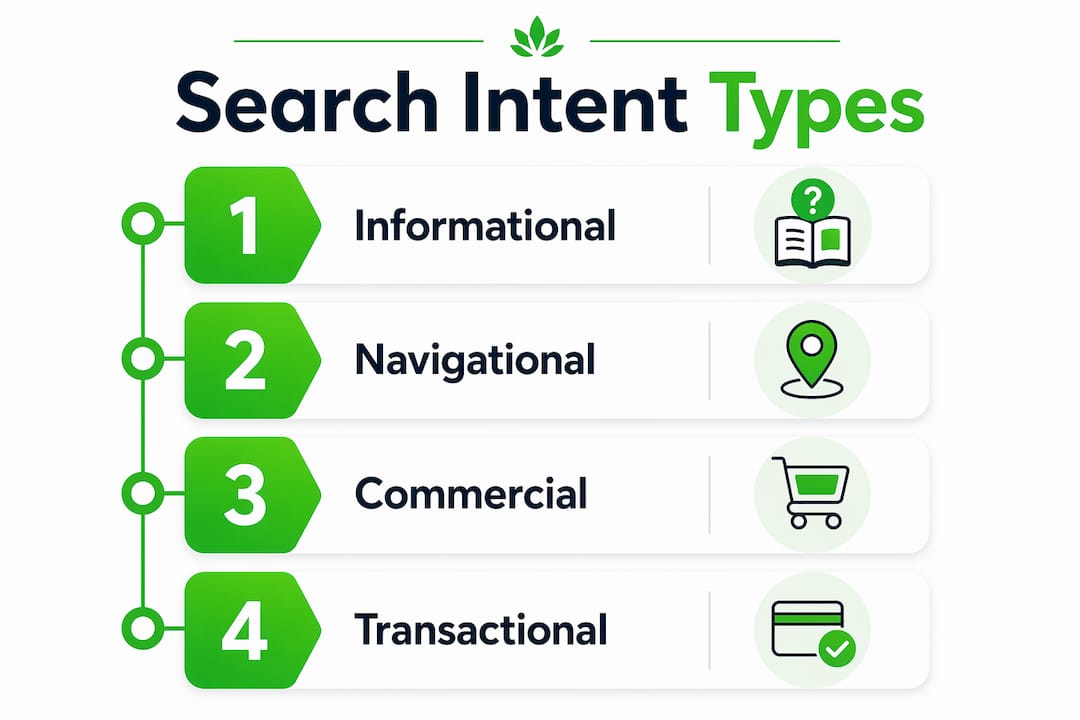
Google’s ranking systems evaluate intent before keyword density, meaning a page that matches what users actually want will outrank a technically superior page that does not. This is the single most important shift in modern SEO practice.
Google operates on what SEO researchers call a “format contract.” The concept works like this:
“Every query carries an implicit promise about what the results should look like. When your content breaks that promise, Google demotes it regardless of backlinks or technical scores.” — Authority Specialist, What Is Search Intent
To understand how this plays out, consider these concrete steps Google’s systems take when evaluating a page:
A real-world example: a dispensary that publishes a 2,000-word educational article targeting “buy weed online near me” will not rank. That query has clear transactional intent. Google expects a product or location page, not an explainer. Misaligning content format with intent causes pages to plateau on page two of the SERP even when every other technical signal is strong.
Pro Tip: Run a monthly SERP audit on your top 20 target queries. If the dominant format has shifted from guides to listicles or from listicles to product pages, your content needs to shift with it.
Effective intent mapping starts with SERP analysis, not keyword research. SEO professionals spend approximately 5 minutes analyzing a query’s top SERP to identify the dominant content type and required format. That five-minute investment prevents weeks of wasted content production.
Here is a practical method for rapid intent analysis:
Beyond basic labeling, the most common mistake is stopping at “informational” or “transactional” without asking what the user needs to walk away with. Intent classification using only broad labels misses the true dominant outcome a user needs after consuming the content. A query like “cannabis dispensary near me open now” is technically navigational and transactional at once. The dominant outcome is a physical address and hours, not a brand story.
Building silo architecture before keyword clustering prevents orphaned content and redundant pages that dilute site authority. Here is how intent types map to content formats and goals:
| Intent Type | Best Content Format | Primary Content Goal |
|---|---|---|
| Informational | Long-form guide, FAQ, explainer | Educate and build topical authority |
| Navigational | Brand page, Google Business Profile | Direct users to the right destination |
| Commercial | Comparison article, review roundup | Support evaluation and build trust |
| Transactional | Product page, service landing page | Convert visitors into customers |
Intent bridges, such as comparison or integration articles, connect different content silos and move users naturally from informational content toward commercial or transactional pages. A guide on “how cannabis terpenes work” can link to a comparison of terpene-rich products, which then links to a product page. That progression mirrors the user journey and strengthens internal linking at the same time.
Pro Tip: Build your content silo map before you write a single piece. Assign each planned article an intent type, a dominant outcome, and a next-step link. This prevents the most common SEO mistake: publishing content that has no logical path forward for the reader.
Most SEO practitioners understand intent in theory. The errors happen in execution. These are the most frequent mistakes and how to avoid them:
Intent profitability comes when you treat it as a content specification that dictates format, evidence, tone, and user paths. That shift in thinking separates practitioners who see consistent ranking gains from those who keep producing content that stalls on page two.
Pro Tip: Set a calendar reminder to re-evaluate your top 10 ranking pages every 90 days. SERP intent can shift as Google updates its understanding of a query. A page that matched intent six months ago may need a format update today.
Shifting from keyword-first to intent-first content planning is the most direct way to improve rankings without adding more content volume. These strategies apply across industries, including the cannabis niche where platform restrictions make organic search the primary growth channel.
Optimizing cannabis content for search performance requires applying these principles within the added constraint of platform restrictions and regulatory language. Intent alignment becomes even more critical when paid search is limited and organic visibility carries the full load.
Pro Tip: For dispensaries and cannabis brands, brand vs. buyer intent searches behave differently in the SERP. Map them separately in your content plan and never mix brand content with transactional content on the same page.
Intent-based SEO works because matching the user’s true goal, not just their keywords, is the primary factor Google uses to rank pages in 2026.
| Point | Details |
|---|---|
| Intent precedes keywords | Google evaluates user intent before keyword presence when ranking pages. |
| Four intent types require four approaches | Informational, navigational, commercial, and transactional content each need distinct formats and CTAs. |
| SERP analysis is the starting point | Spend five minutes analyzing top results before writing to identify the required format and angle. |
| Silo architecture prevents content waste | Build content silos around intent types before clustering keywords to avoid orphaned pages. |
| Intent bridges connect user journeys | Comparison and integration articles link silos and move users from discovery to conversion naturally. |
I spent years watching well-written content stall on page two with no clear explanation. The keywords were right. The backlinks were solid. The technical scores were clean. The problem, every single time, was format mismatch. The content was answering a question Google had already decided deserved a different kind of answer.
What shifted my thinking was treating the SERP as a specification document rather than a competitive landscape. The top results are not just competitors. They are Google’s current best answer to what users want. When you read them that way, the format contract becomes obvious. You stop asking “how do I rank above this page?” and start asking “what does this page tell me about what users actually need?”
The cannabis and hemp space makes this even more pronounced. Organic search carries the full weight of customer acquisition when paid channels are restricted. A dispensary that publishes educational content targeting transactional queries is burning budget and time. An agency that maps intent correctly before writing a single word gives its clients a structural advantage that compounds over time.
My honest prediction for 2026 and beyond: Google will get better at detecting intent mismatches at the paragraph level, not just the page level. That means every section of your content needs to serve the same dominant outcome. Mixed-intent pages, where you try to educate and sell on the same URL, will lose ground to pages that commit fully to one intent and execute it precisely.
The sites that win will be the ones that treat every URL as a deliberate step in a user journey, not an isolated piece of content competing for a keyword.
— Max
Cannabis businesses face a challenge most industries do not. Paid search restrictions mean organic rankings are not a nice-to-have. They are the primary growth channel. Getting intent wrong does not just hurt rankings. It costs you customers you cannot replace through ads.
Dopeseo builds intent-first SEO strategies specifically for dispensaries, cultivators, and ancillary cannabis businesses. From content silo architecture to on-page format alignment, every service is designed around the user journey, not just keyword volume. If you want a strategy that matches what your customers are actually searching for, explore Dopeseo’s cannabis SEO services and see how intent-driven optimization translates into measurable organic growth.
Intent-based SEO is the practice of aligning content format, angle, and call to action with the true goal behind a user’s search query. It goes beyond keyword matching to satisfy what users actually want from a search result.
The four types are informational, navigational, commercial, and transactional. Each requires a different content format: guides for informational queries, brand pages for navigational, comparisons for commercial, and product or service pages for transactional.
Google’s ranking systems assess intent before keyword presence, meaning pages that match the expected format and angle for a query outrank technically stronger pages that do not. This is enforced through what researchers call the format contract.
Search the keyword in an incognito browser and analyze the top five results. The dominant content type, angle, and call to action pattern in those results tell you exactly what format Google expects for that query.
When content format does not match the intent Google has identified for a query, the page stalls on page two regardless of keyword optimization or backlink strength. Fixing the format to match SERP expectations is the most direct path to ranking improvement.

© 2026 Curious Monkeys Pressing Buttons LLC DBA Cannabiz Marketing Solutions AKA DopeSEO. All rights reserved.