
Approximately 70% of cannabis marketing relies on organic SEO rather than paid ads due to platform bans. This makes keyword research not just helpful but essential for cannabis businesses competing for online visibility. Without strategic keyword targeting, your dispensary or cultivation facility risks invisibility in the exact searches driving customer decisions and foot traffic.
| Point | Details |
|---|---|
| Keyword research drives cannabis SEO success | Regulatory constraints make organic search the primary visibility channel for cannabis businesses |
| Local keywords outperform generic terms | Geo-targeted keywords connect dispensaries with nearby customers actively seeking products |
| Segment-specific strategies enhance targeting | Dispensaries, cultivators, and ancillary businesses require distinct keyword approaches |
| Continuous optimization is essential | Regular updates keep strategies aligned with evolving regulations and search behaviors |
| Intent-driven keywords improve conversions | Prioritizing relevance over volume delivers higher quality traffic and sales |
Keyword research involves identifying the specific search terms your customers use when looking for cannabis products, services, or information. For cannabis businesses, this process is more than standard SEO practice. It’s your primary marketing tool in an industry where advertising options remain severely limited.
Effective keyword research is essential for cannabis businesses to boost online visibility and attract targeted customers. When executed properly, keyword research improves your search rankings, increases qualified traffic, and helps you stand out in a crowded market. The cannabis industry faces unique digital marketing challenges that make organic search optimization critical.
Regulatory limits on paid advertising increase your reliance on organic search visibility. While mainstream businesses can buy their way to the top of search results through paid ads, cannabis companies must earn visibility through strategic content and keyword optimization. This reality makes mastering cannabis keyword research an investment that directly impacts your bottom line.
Keyword research delivers multiple benefits:
Pro Tip: Focus on keywords that reflect customer intent rather than industry jargon. Your customers search for “dispensary near me” or “CBD pain relief,” not technical cultivation terms.
Strict advertising regulations limit paid promotion for cannabis businesses across most major platforms. Google Ads restricts cannabis advertising, Facebook and Instagram ban cannabis promotion entirely, and traditional media outlets often refuse cannabis advertising. This regulatory landscape forces cannabis businesses to rely almost exclusively on organic search visibility.
Keyword selection must comply with local and federal laws that vary dramatically by jurisdiction. What works for a California dispensary may violate regulations in another state. Platform restrictions on Google and social media reduce paid keyword opportunities to nearly zero for most cannabis businesses. These constraints make organic SEO through strategic keyword research your main visibility channel.
Understanding these limitations shapes realistic keyword strategies:
These advertising challenges for cannabis businesses mean you can’t simply outspend competitors. You must outthink them with smarter keyword strategies that align with regulations while capturing customer intent. The businesses that succeed are those treating keyword research as an ongoing strategic priority rather than a one-time setup task.

Local keywords increase your relevancy in Google Maps and local search results, where most cannabis customers begin their purchasing journey. Geographic proximity matters enormously in cannabis retail, where customers typically choose dispensaries within a few miles of their location. Targeted local keywords address both user intent and geographic proximity simultaneously.
Dispensaries using local keywords see 75% more customer visits via local search. This statistic reflects how effectively local keyword optimization converts searches into actual store visits. When someone searches “dispensary near downtown Portland” or “best cannabis delivery in Denver,” local keyword optimization determines whether your business appears in those critical results.
Local keyword optimization includes several strategic elements:
Higher local search rankings correlate directly with increased in-store visits and online orders. The difference between ranking first versus fifth in local search results can mean hundreds of lost customers monthly. Focus on conversion, not just traffic volume, by refining local search terms to match high-intent queries. A customer searching “cannabis delivery open now” has much higher conversion potential than someone searching “what is CBD.”
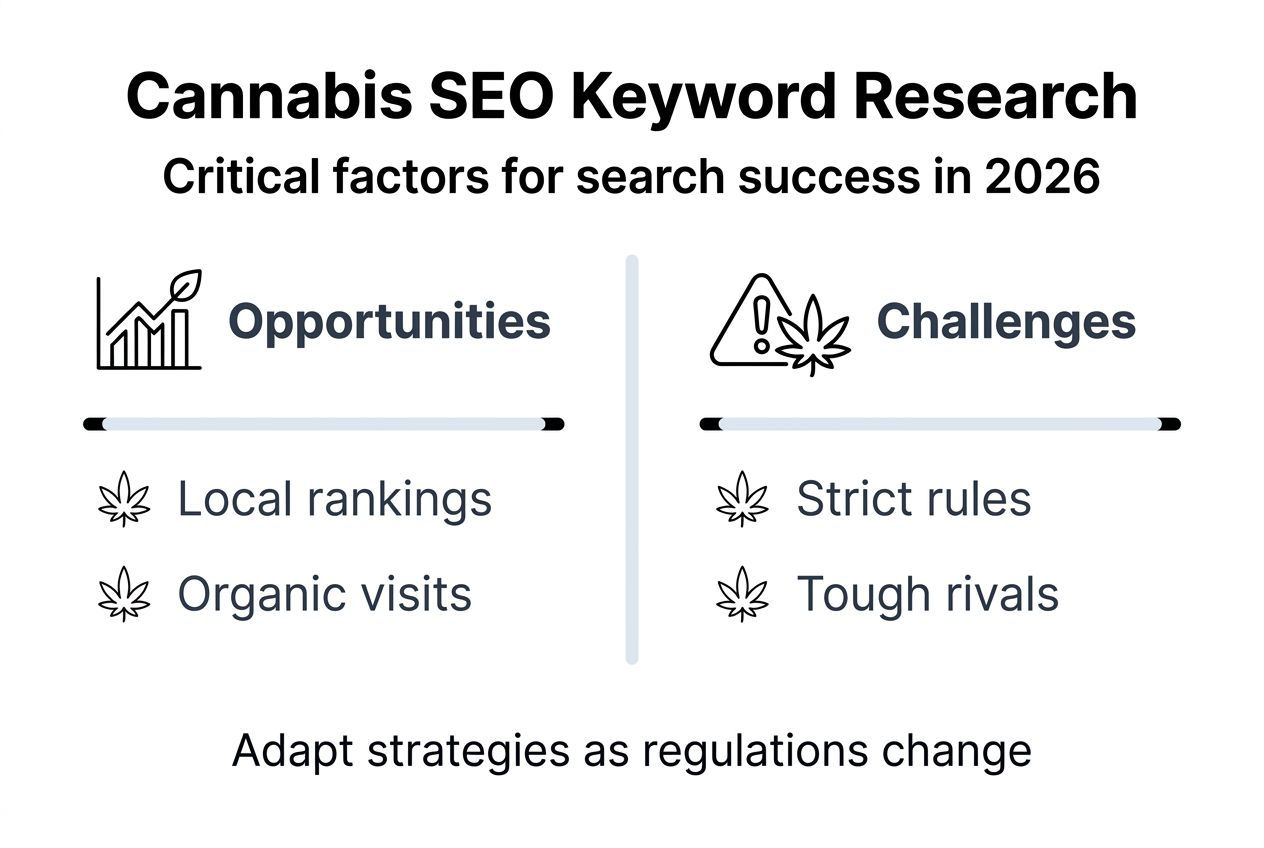
Local SEO for cultivators and dispensaries requires understanding how customers search for cannabis products in your specific market. Regional slang, local landmarks, and neighborhood names all play roles in effective local keyword strategies.
Different cannabis business types require distinct keyword approaches based on their target audiences and business models. Dispensaries focus on transactional, local-intent keywords related to products, services, and immediate purchase opportunities. Keywords like “cannabis edibles near me,” “dispensary open Sunday,” or “weed delivery same day” capture high-intent customers ready to buy.
Cultivators emphasize informational keywords targeting B2B clients and industry research. Their keyword strategies might include “wholesale cannabis suppliers,” “commercial grow equipment,” or “cannabis cultivation licensing.” These businesses need keywords that attract other industry professionals rather than retail customers.
Ancillary businesses blend informational and transactional keywords tailored to their specific offerings. A cannabis marketing agency targets “cannabis SEO services” and “dispensary website design,” while a packaging company focuses on “child-resistant cannabis containers” and “compliant cannabis labels.”
| Business Type | Primary Keyword Focus | Example Keywords |
|---|---|---|
| Dispensaries | Transactional, local | “dispensary near me,” “cannabis delivery” |
| Cultivators | Informational, B2B | “wholesale cannabis,” “grow equipment” |
| Ancillary Services | Mixed intent, industry-specific | “cannabis packaging,” “dispensary POS systems” |
Segmented approaches improve keyword relevance and conversion rates by matching terms to your specific business goals. Keyword themes differ significantly based on whether you’re selling to consumers or other businesses, operating retail locations or delivery services, or providing products versus services.
Pro Tip: Analyze competitor keywords within your specific business segment. A cultivation facility competing with other cultivators needs different intelligence than a dispensary competing locally.
Effective cannabis marketing strategies recognize these segment differences and build keyword plans accordingly. Generic cannabis keywords rarely convert as effectively as segment-specific terms that match your exact offerings and target audience.
High search volume keywords often have high competition and low conversion rates in cannabis. Many businesses chase popular terms like “cannabis” or “weed” without recognizing these generic keywords attract browsers rather than buyers. The dispensary ranking for “cannabis” faces thousands of competitors and gets traffic from people researching the plant, not necessarily looking to purchase.
Relevance and alignment with user intent matter more than generic volume. A keyword with 500 monthly searches but strong purchase intent outperforms a 50,000-volume keyword attracting information seekers. Local intent keywords outperform broad generic terms for dispensaries because they capture customers ready to visit or order.
Several myths damage cannabis SEO efforts:
Ongoing keyword refinement is necessary due to changing regulations, evolving search behaviors, and shifting market dynamics. A keyword strategy from six months ago may miss emerging trends or use terms that now violate platform policies. The cannabis industry changes rapidly, and your keyword strategy must keep pace.
Avoid treating keyword research as something you complete once and forget. Successful cannabis businesses revisit their keyword research strategies quarterly at minimum, adjusting for seasonal trends, new products, regulatory updates, and competitive movements. The businesses dominating search results treat keyword optimization as an ongoing competitive advantage, not a completed checklist item.
Modern keyword research extends beyond basic tools into AI-driven discovery and sophisticated competitive analysis. These advanced approaches help cannabis businesses identify opportunities competitors miss and adapt faster to market changes.
Utilize AI tools for efficient keyword generation. Modern AI platforms analyze search patterns, identify semantic relationships, and suggest keyword variations human researchers might overlook. These tools process vast datasets to reveal emerging trends before they become obvious.
Conduct competitor analysis to identify keyword gaps. Examine which keywords drive traffic to competing dispensaries or cultivation facilities. Tools like SEMrush or Ahrefs reveal competitor keyword portfolios, showing opportunities where they rank but you don’t.
Prioritize keywords based on business goals and search intent. Not all keywords deserve equal attention. Rank potential keywords by conversion likelihood, competition level, and strategic fit with your business model.
Implement continuous keyword trend monitoring. Set up alerts for emerging cannabis terms, regulatory language changes, and shifting customer search behaviors. Markets evolve, and your keyword strategy must evolve with them.
Leverage insights to optimize content and local SEO systematically. Transform keyword research into content calendars, page optimizations, and local listing updates. Research without implementation produces zero results.
Advanced cannabis keyword techniques combine these methods into cohesive strategies that adapt to your market position and business goals. The most successful cannabis businesses treat keyword research as ongoing competitive intelligence rather than periodic SEO maintenance.
Implementing effective keyword research requires a systematic approach that respects regulatory constraints while maximizing visibility opportunities. Follow these practical steps to transform research into results.
Audit your current keyword performance and online presence. Identify which search terms already drive traffic, where you rank for target keywords, and which pages perform best. This baseline reveals strengths to build on and gaps to fill.
Research cannabis-specific keywords respecting legal constraints. Use keyword tools filtered for your jurisdiction, focusing on terms compliant with local regulations. Balance informational and transactional keywords based on your business model.
Analyze competitors for keyword gaps and opportunities. Identify terms where competitors rank but you don’t, especially local keywords with strong commercial intent. Look for content gaps you can fill with better, more targeted information.
Prioritize keywords based on intent and conversion potential. Create tiered keyword lists separating high-priority terms from secondary targets. Focus initial efforts on keywords combining decent volume with clear purchase intent and manageable competition.
Integrate keywords into content, local SEO, and reputation management. Update website pages, create new content targeting priority keywords, and optimize Google Business Profile with relevant terms. Keyword research only matters when applied consistently across your digital presence.
Monitor and adjust based on trends and regulatory changes. Schedule quarterly keyword reviews, track ranking movements, and adapt to market shifts. The cannabis marketing strategies that succeed long-term build flexibility and continuous improvement into their processes.
Pro Tip: Start with local keywords for quick wins. Local search competition is typically less intense than national terms, and local rankings drive immediate business impact through store visits and delivery orders.
Integrate your keyword strategy with broader cannabis marketing social media strategies for cohesive cross-channel messaging. Keywords inform not just SEO but content themes across all your digital marketing efforts.
Navigating cannabis keyword research while maintaining regulatory compliance requires specialized expertise. The complexities of platform restrictions, evolving regulations, and intense local competition make professional guidance valuable for businesses serious about dominating their markets.
Partner with specialists who understand cannabis marketing inside and out. Access proven cannabis marketing strategies tailored to your specific business segment and local market. Professional cannabis SEO services implement the keyword research, content optimization, and local visibility tactics that transform search rankings into revenue growth.
Stay compliant with evolving regulations while maximizing visibility through master cannabis SEO strategies designed specifically for dispensaries, cultivators, and ancillary businesses. Expert guidance helps you avoid costly compliance mistakes while capitalizing on opportunities competitors miss. Enhance local visibility and customer acquisition through tailored strategies detailed in our local search strategy guide for cannabis businesses.
Keyword research identifies the specific search terms your cannabis customers use when looking for products, services, or information online. It guides your SEO strategy to boost visibility where customers actually search. For cannabis businesses facing advertising restrictions, keyword research becomes the foundation of digital marketing success, directly impacting your ability to attract qualified traffic and generate sales.
Regulations restrict promotional language and certain cannabis terms across search platforms and advertising networks. Keyword choices must comply with local and federal laws to avoid content removal or penalties. This means carefully selecting terms that describe your offerings accurately while respecting platform policies and legal boundaries in your jurisdiction.
Local keywords improve your rankings in Google Maps and local search results where nearby customers actively search for dispensaries and cannabis services. They connect your business with high-intent customers in your immediate service area. Since most cannabis purchases happen within a few miles of home, local keyword optimization directly drives foot traffic and conversions.
Regular quarterly updates keep your SEO strategy aligned with changing regulations, seasonal trends, and evolving search behaviors. The cannabis market shifts rapidly, with new products, regulatory changes, and competitive movements requiring ongoing keyword adjustments. Businesses treating keyword research as continuous competitive intelligence maintain stronger rankings and visibility than those updating annually or less frequently.

© 2026 Curious Monkeys Pressing Buttons LLC DBA Cannabiz Marketing Solutions AKA DopeSEO. All rights reserved.