
TL;DR:
- White hat SEO ensures hemp businesses build sustainable, compliant search visibility without penalties.
- Regulated hemp industry requires ongoing compliance checks and ethical content and link-building strategies.
- Partnering with specialized hemp SEO experts helps maintain legal standards and long-term growth.
Many hemp business owners assume that getting found online requires bending the rules, using aggressive tactics, or flying under the radar of search engines. That assumption is not only wrong, it is actively dangerous for your brand. White hat SEO refers to search optimization strategies that fully comply with Google’s guidelines and legal advertising standards. For hemp companies navigating a tightly regulated market, this approach is not just the safer choice. It is the only choice that builds lasting, scalable visibility without putting your business at risk of penalties, deindexing, or regulatory trouble.
| Point | Details |
|---|---|
| Ethics matter most | Only white hat SEO keeps your hemp business both visible and compliant in a regulated market. |
| Stay alert to changes | Regularly adapting to regulations protects your SEO investments from penalties and setbacks. |
| Compliance is a win | Businesses that follow the rules build lasting reputations and outperform risky competitors over time. |
Now that we have challenged the myth that all cannabis SEO is risky, let us pin down what white hat SEO really means for your hemp business.
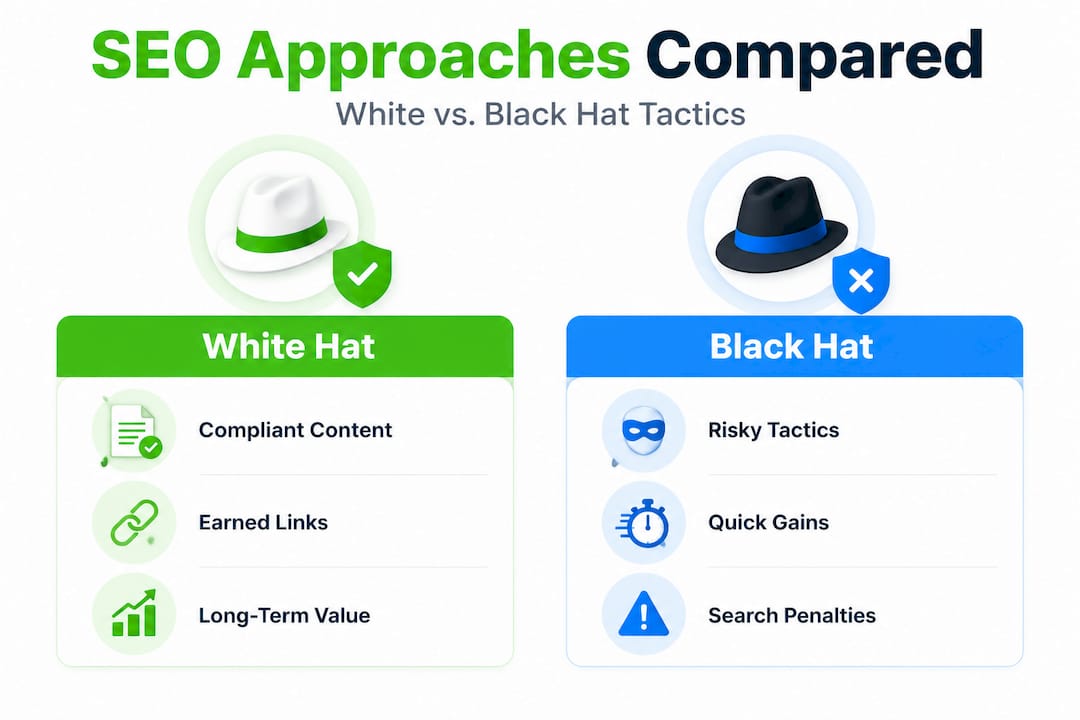
White hat SEO is the practice of improving your search rankings through methods that Google explicitly approves of. These include publishing high-quality content, earning backlinks from credible sources, optimizing your website’s technical structure, and providing a genuinely useful experience for visitors. According to ethical SEO principles, white hat SEO focuses on ethical tactics and compliance, which is especially critical for hemp businesses operating in highly regulated environments.
The contrast with black hat and gray hat tactics is significant. Black hat SEO involves practices Google explicitly prohibits, such as buying links in bulk, keyword stuffing, cloaking content, or using private blog networks to inflate rankings. Gray hat tactics fall in a murky middle ground: they are not explicitly banned, but they push boundaries in ways that carry real risk. For hemp brands, gray hat approaches are especially dangerous because your business already operates under a regulatory microscope.
Here is how the three approaches compare:
| Approach | Examples | Risk level | Long-term value |
|---|---|---|---|
| White hat | Quality content, earned links, technical SEO | Low | High |
| Gray hat | Aggressive anchor text manipulation, link exchanges | Medium | Moderate |
| Black hat | Link buying, cloaking, keyword stuffing | High | None |
Why does compliance matter so much in this space? Hemp businesses face scrutiny from multiple directions at once: federal regulations, state laws, platform advertising policies, and Google’s own content guidelines. A single search penalty can wipe out months of organic traffic overnight. Reputation damage from non-compliant content can follow your brand for years. The benefits of staying ethical are real and measurable.
Key benefits of white hat SEO for hemp brands include:
Understanding SEO compliance for cannabis is the foundation your strategy needs to stand on before you build anything else.
With the basics of white hat SEO clear, it is time to face the unique hurdles hemp ventures encounter online.
The hemp industry operates in a legal gray area that creates friction at nearly every stage of digital marketing. Federal law still classifies marijuana as a Schedule I substance, and even hemp, which was federally legalized under the 2018 Farm Bill, faces advertising restrictions on major platforms including Google, Meta, and Amazon. This means paid traffic is largely off the table, making organic search one of your most valuable channels.

Search engines themselves add another layer of complexity. Google does not ban hemp content outright, but it applies stricter quality standards to health and wellness topics, which often overlap with hemp and CBD product claims. Pages that make unsubstantiated health claims, even unintentionally, can be flagged under Google’s E-E-A-T framework (Experience, Expertise, Authoritativeness, and Trustworthiness). A page that promises specific medical benefits for CBD without proper disclaimers is a liability, not an asset.
The most common compliance pitfalls hemp businesses encounter include:
“Ethical SEO is not only effective but required for businesses operating in regulated industries like hemp.” This is not just a best practice. It is a business survival strategy.
Staying visible and legal requires building compliance checkpoints directly into your content creation and link-building workflows. Do not treat compliance as an afterthought you address before publishing. Bake it into your process from day one.
Pro Tip: Create a compliance checklist that every piece of content must pass before it goes live. Include checks for health claims, keyword usage, disclaimer language, and source credibility. Review this checklist quarterly as regulations evolve.
Leveraging AI-driven SEO for hemp can help automate parts of this monitoring process, flagging potential compliance issues in your content before they become problems.
Understanding the obstacles paves the way for solutions. Let us get practical with exact strategies for hemp business SEO success.
1. Optimize content for user intent and compliance
Your content needs to answer real questions your customers are asking, without crossing into restricted territory. Focus on educational content: how hemp is grown, how CBD is processed, what the research says (with proper caveats), and how to choose quality products. Every page should include appropriate disclaimers and avoid making specific medical claims.
When optimizing cannabis content for search, map each page to a specific user intent. Informational pages should educate. Product pages should convert. Local pages should connect. Mixing these up creates confusing experiences that hurt both rankings and conversions.
2. Build links ethically through industry partnerships
Link-building in the hemp space requires patience and strategy. Focus on earning links from cannabis industry publications, hemp trade associations, local business directories, and relevant wellness or agriculture sites. Contributed articles, podcast appearances, and press releases about genuine company news are all legitimate ways to earn high-quality backlinks.
Avoid any service that promises hundreds of links quickly. In this industry, a handful of authoritative, relevant links is worth far more than thousands of low-quality ones. Compliant content and ethical link-building are the twin pillars of long-term search rankings in the hemp sector.
3. Invest in technical SEO
Technical SEO is the backbone of your visibility. A site that loads slowly, breaks on mobile, or has crawl errors cannot rank well no matter how good the content is. Core areas to address include:
4. Prioritize local SEO and your Google Business Profile
For hemp retailers and dispensaries, local SEO is often the highest-return activity you can invest in. Your Google Business Profile acts as your digital storefront in local search results. Keep it fully updated with accurate hours, categories, photos, and responses to customer reviews.
Use location-specific landing pages for each market you serve. These pages should include locally relevant content, not just a city name swapped into a generic template. Review management matters too. Businesses with consistent, positive reviews rank higher in local map results and earn more trust from new customers.
Here is a sample compliance content framework to guide your strategy:
| Content type | Primary goal | Compliance check | Key SEO element |
|---|---|---|---|
| Educational blog post | Build authority | No health claims | Target informational keywords |
| Product page | Drive conversions | FDA disclaimer included | Optimized title and meta |
| Local landing page | Capture local traffic | State-specific legal language | Location keywords, schema |
| Press release | Earn backlinks | Factual, no claims | Anchor text diversity |
| FAQ page | Answer user questions | Cite credible sources | Featured snippet optimization |
Pro Tip: Schedule a quarterly technical and compliance audit. Use tools like Google Search Console and Screaming Frog to catch crawl errors, and cross-reference your content against the latest FDA and FTC guidelines for hemp and CBD claims. Document everything so you have a clear record of your compliance efforts.
Reviewing cannabis SEO best practices regularly will help you stay aligned with both search engine expectations and industry standards.
Even the most effective strategies need updating. Here is how to ensure your SEO remains both effective and compliant, year after year.
Cannabis and hemp regulations change constantly. At the federal level, the FDA continues to develop its framework for CBD in food and supplements. At the state level, rules around hemp product sales, advertising, and labeling vary widely and shift regularly. Search platforms update their advertising and content policies multiple times per year. What was compliant in 2024 may not be compliant in 2026.
Proactive strategy adaptation is the difference between businesses that maintain visibility through regulatory shifts and those that scramble to recover after a penalty or policy change.
Here is how to stay ahead:
A useful monitoring checklist for your team should include:
Over 40% of hemp businesses require regular compliance audits to keep their digital marketing aligned with shifting rules. That statistic reflects how dynamic this environment is. Relying on AI-driven SEO steps can help automate parts of this monitoring, making it easier to catch issues before they become costly problems.
Let us step back and explore why a methodical, compliant approach to SEO is your hedge against risk in this volatile space.
The conventional wisdom in competitive digital marketing often rewards speed. Move fast, test aggressively, and optimize later. That mindset works in low-stakes industries. In hemp, it can end your business’s online presence entirely.
We have seen it happen. A hemp brand invests heavily in a link scheme that produces fast ranking gains. Six months later, a Google core update wipes out 70% of their organic traffic. Rebuilding takes 12 to 18 months, assuming the site avoids a manual penalty. Meanwhile, a competitor who built rankings slowly through consistent content and ethical link-building keeps climbing. The tortoise does not just win this race. The hare often gets disqualified.
The uncomfortable truth is that many hemp businesses chase shortcuts because white hat SEO feels slow. And it is slower, at first. But the compounding effect of quality content, earned authority, and technical excellence creates a foundation that algorithm updates tend to reward rather than punish. White hat marketing wins are not just ethical victories. They are strategic ones.
Transparency also builds something that black hat tactics never can: genuine customer trust. When your content is accurate, your disclaimers are clear, and your brand voice is consistent, customers return. They refer others. They leave reviews. That organic brand equity feeds your SEO in ways that no link scheme can replicate.
The hemp industry is still maturing. Regulations will tighten in some areas and loosen in others. The brands that will dominate search results in five years are the ones building compliant, authoritative presences right now. Not the ones gaming the system today.
Having explored the ins and outs of doing SEO the right way, here is how to get expert help for your hemp brand.
Navigating the intersection of search optimization and cannabis compliance is not something a generalist agency is equipped to handle. You need a partner who understands both the technical demands of SEO and the regulatory landscape your business operates in.
Dope SEO specializes in exactly this. From technical audits and content strategy to local search optimization and ethical link-building, every service is designed for hemp and cannabis businesses specifically. Whether you are ready to master cannabis SEO from the ground up or you need to audit and repair an existing strategy, the team brings industry-specific expertise that generalist firms simply cannot match. Start by exploring the digital marketing basics built for your market, and see how a compliant, targeted approach can drive real, lasting growth for your hemp brand.
White hat SEO helps hemp companies achieve reliable search visibility while staying compliant with both laws and search engine guidelines. Because hemp operates under strict regulations, white hat tactics are required for long-term success without the risk of penalties or deindexing.
Examples include creating compliant web content with proper disclaimers, earning links from credible industry partners, and using transparent technical optimizations like schema markup and mobile optimization. Compliant content and ethical link-building are the foundation of sustainable hemp SEO.
Regular compliance audits, clear content policies, and consulting with specialists who understand cannabis regulations can help hemp brands stay within legal guidelines. Ongoing audits are especially important as both search engine policies and hemp laws continue to evolve.
Using risky SEO tactics can lead to search penalties, lost visibility, and even legal consequences for hemp businesses. Because hemp brands already face regulatory scrutiny, white hat SEO avoids the compounded risk of search engine penalties layered on top of existing legal exposure.

© 2026 Curious Monkeys Pressing Buttons LLC DBA Cannabiz Marketing Solutions AKA DopeSEO. All rights reserved.